The hardest question on any multigenerational trip is not “where?” but “where does it work for everyone?”. The grandchildren want adventure. The parents want, for once, not to have to organise anything. And the grandparents want to be there without the journey turning into a physical test. Most destinations answer two of those three. The Moroccan Sahara, planned properly, answers all three.
That sounds counterintuitive at first. For many people, desert means hardship, long tracks and canvas underfoot. The reality in a privatised luxury camp at Erg Chegaga is a different one, and that is exactly why more and more families in Europe and North America choose this format when three generations travel together.
Why the desert works for three generations
The real problem on a multigenerational trip is rarely the destination. It is the setting: hotels that scatter the family across floors and breakfast slots, cities where every activity becomes a negotiation, resorts where everyone disappears into their own programme.
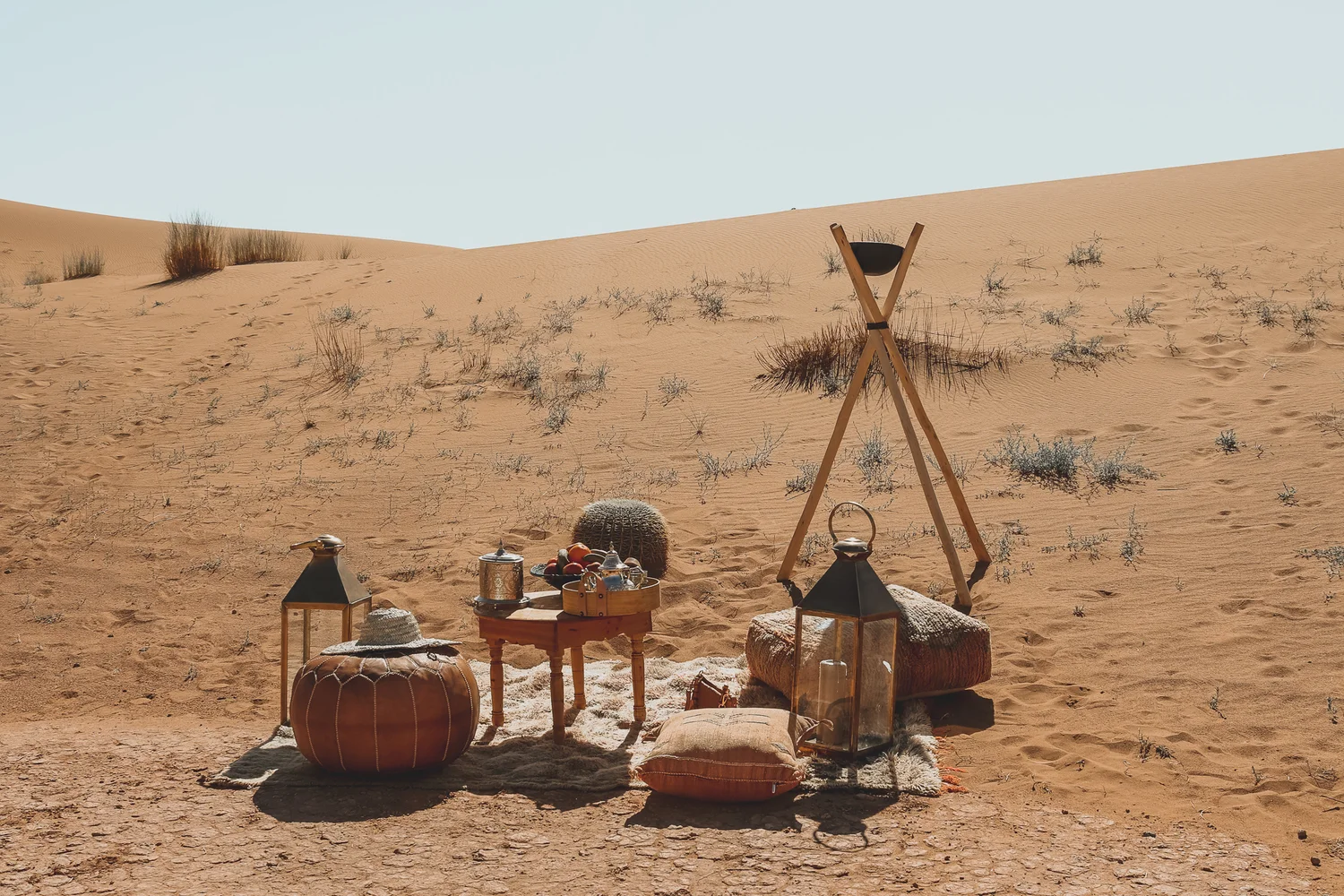
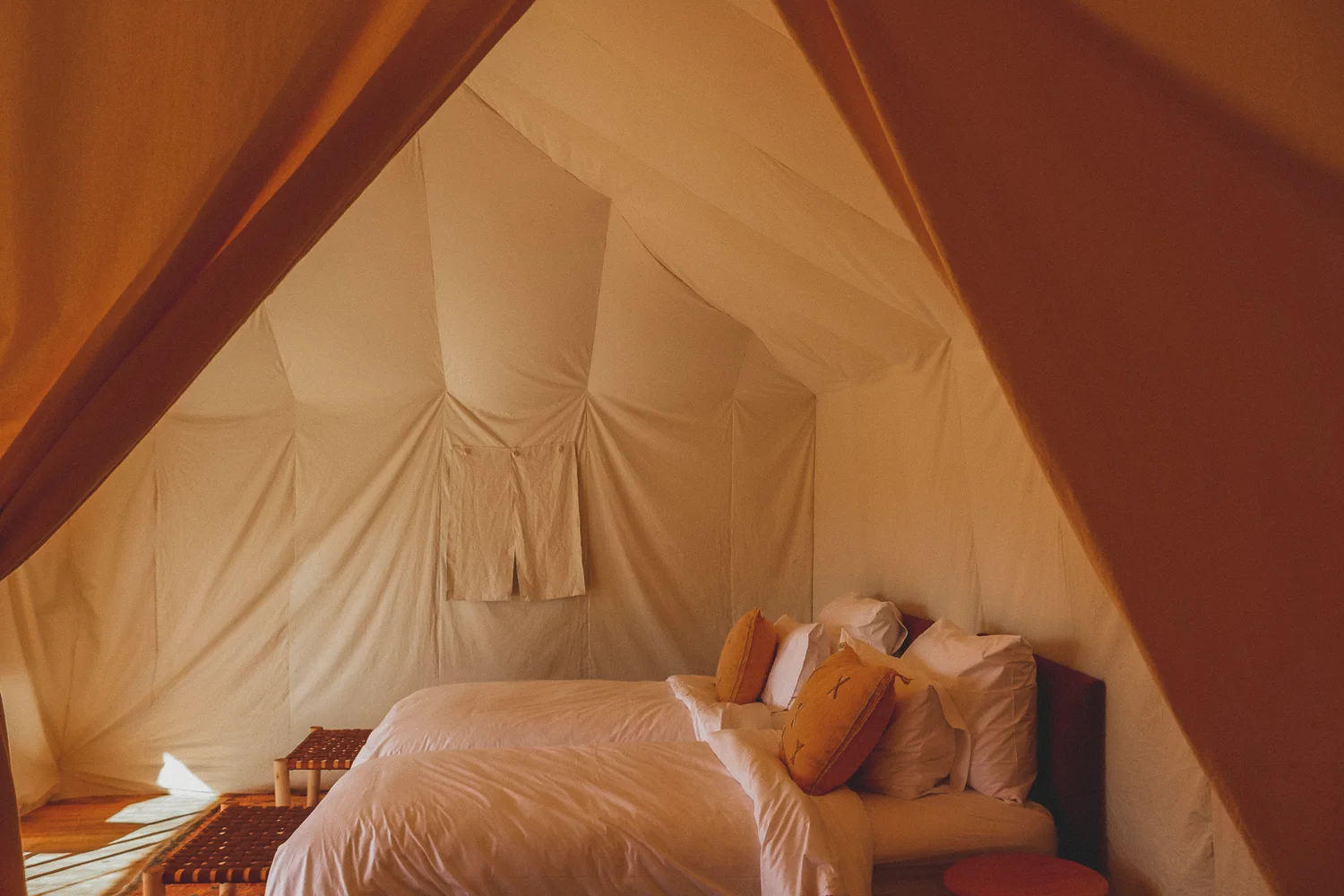
A private desert camp reverses that logic. Umnya Desert Camp has eight tented suites, each with its own bathroom, for 2 to 18 guests and up to 20 with extra beds. That is almost exactly the size of a family made up of grandparents, two or three adult children with their partners, and the grandchildren. With a full buyout, the whole camp belongs to your family: no other guest, only one group at a time, no schedule but your own.
We watch the same thing happen with every family. There is no phone signal anywhere except at the top of the big dune, so the wifi reflex fades and nobody slips away to a room. By evening, everyone really is sitting around the same fire. The grandchildren hear stories that never get told at home. What comes out of it is the thing these trips are made for: time together that does not feel like an obligation.
Comfort for the grandparents: the details that decide it
Whether a multigenerational trip succeeds is decided by the comfort of the oldest travellers. So here are the facts that matter for the generation of seventy and beyond.
- Proper beds, private bathrooms. Every tented suite has a real bed, a private bathroom with shower and WC, and electricity. Nobody has to cross the camp at night.
- A flat camp, short distances. Only a few steps on firm, prepared ground separate the suite, the dining tent and the fire.
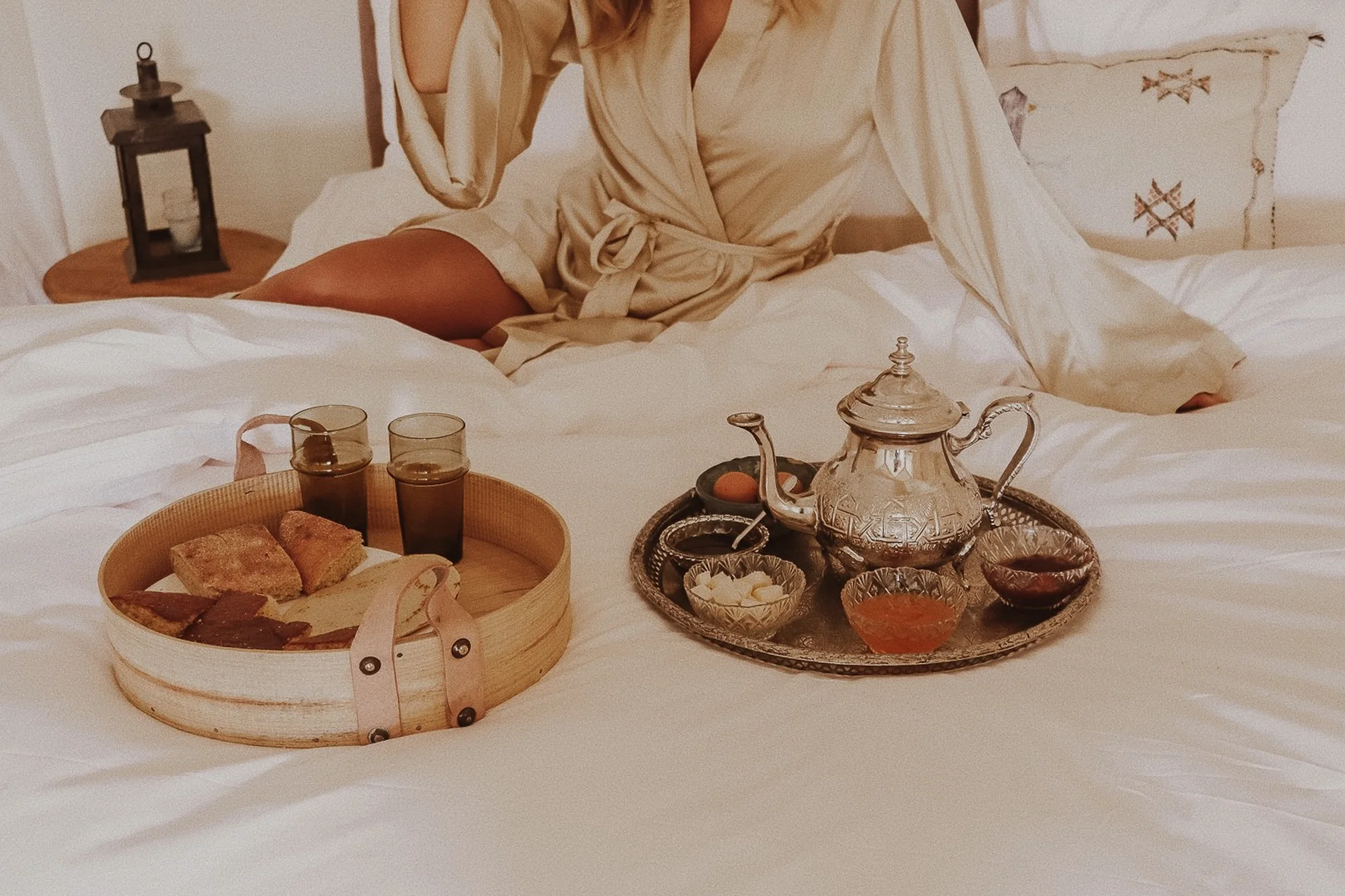
- One host for every two guests. An arm on the way up the small viewing dune, a tea brought to the terrace, a menu adjusted for an intolerance: all of it is taken as read.
- Your own pace. While the grandchildren sandboard down the dunes, the grandparents sit in the shade of the lounge looking at exactly that scene. Both are living the same afternoon, each at their own rhythm.
On timing: the camp is open from September to June and closed in July and August. From October to April the days run between 18 and 28 degrees, with cool nights; in December and January the days sit between 18 and 24 degrees and the nights between 2 and 8. The Christmas and Easter holidays work well for the simple reason that the whole family is already free.
Getting there: the helicopter solves the biggest problem
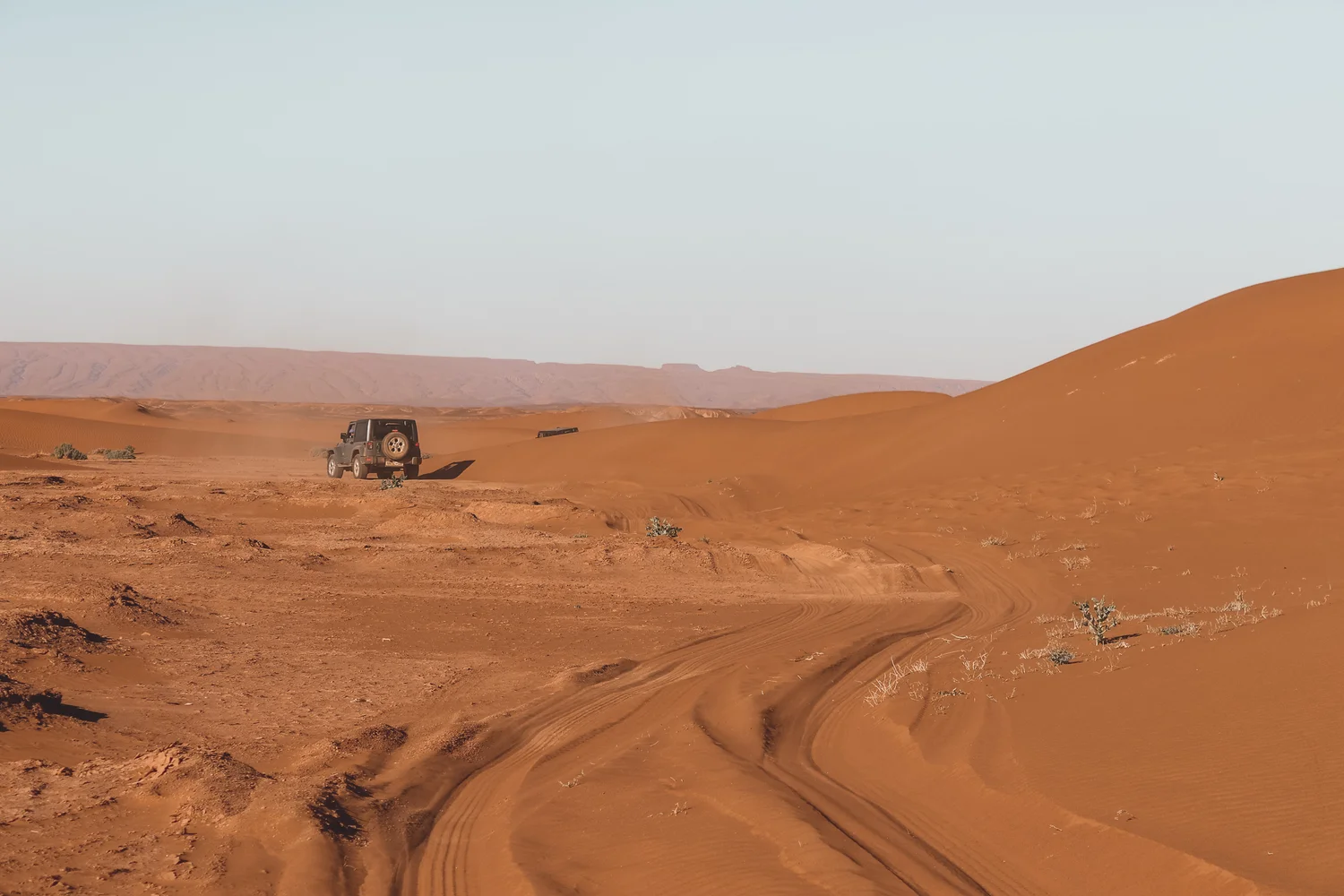
The most honest objection to the Sahara with grandparents is the journey. From Marrakech it is around 8 hours 45 of road, including 1 hour 30 of track, across the High Atlas and down the Draa valley to M’Hamid El Ghizlane, with Erg Chegaga a further 60 km on. For many travellers that road is a highlight of the trip. For anyone with back problems or limited stamina it can be an obstacle.
The answer is to split the arrival. The younger generations take the scenic route in a comfortable 4x4, with stops in the oasis and in the pottery village of Tamegroute. The grandparents fly by private helicopter straight from Marrakech to the camp: 1 hour 40 from Marrakech Menara, five or six seats per rotation, landing practically at the door of their tent. The weakest point of the destination becomes an experience of its own, with the Atlas, the oases and the sea of dunes seen from the air.
One day, three generations
This is what a typical day in camp can look like when 8 and 80 have to be happy at the same time.
Morning
Sunrise on the dune for the early risers, a long breakfast for everyone else. Then a camel ride in the cool morning air, which in our experience delights grandchildren and grandparents equally, because the pace of a camel suits both generations.
Midday
Lunch together, then quiet. The desert imposes a siesta culture that suits the older travellers and does the younger ones good. Anyone who does not want to rest plays in the sand, reads on the terrace or learns in the kitchen how a tagine is made.
Afternoon
A 4x4 outing through the dunes for the adventurous, driven gently or sportily as you prefer. Or a visit to nomad families of the region, the part of the programme that regularly leaves the deepest impression on the grandparents.
Evening
Sunset, dinner at one long table, fire, stars. The sky above Erg Chegaga is Bortle class 1, which means practically no light pollution. When the grandchildren see the Milky Way for the first time and their grandfather names the constellations he learned as a boy, that is the moment the whole trip was for. There is more on this in our piece on stargazing in the Sahara.
Practical questions families ask
What age does this work from, and up to? There is no fixed lower limit. Families travel most easily with children from around four, and there is more on that in our guide to family travel in the desert. At the other end, general mobility decides, not the year of birth. Guests over 80 are nothing unusual.
What about health conditions? Tell us about conditions and needs before you travel. The team adjusts, from the firmness of the mattress to the menu planning. The nearest hospital is in Zagora, and there are clear procedures for emergencies.
How long should the family stay? Three nights is ideal. The first night to arrive, days two and three for the experiences and the time together, without boredom setting in or the return following too abruptly.
Does everyone have to do the same activities? No, and that is precisely the point. A buyout means several programmes can run at once: 4x4 for some, quiet for others, and everyone back together for dinner.
What the trip means for each generation
The quiet reason a multigenerational trip works is that each generation takes something different from it, without the others having to give anything up.
For the grandchildren the desert is one large adventure playground: running down dunes, looking for the tracks of desert animals, sitting on a camel, counting shooting stars at night. Children need no entertaining here, the landscape does it. Many parents tell us their children became calmer and easier to reach after a few days without screens, with no argument about it, simply because the alternative was more interesting.
For the middle generation it is often the first trip in years on which they are neither host nor organiser. The team takes over the kitchen, the programme and the logistics. What is left is the rare experience of spending time with your own parents and your own children at once, without a to-do list in between.
For the grandparents it is frequently the trip they had stopped believing they would still make. The Sahara had been on the list for a lifetime. Seeing it with their grandchildren, in real comfort and without physical strain, carries an emotional weight that moves hosts and team alike.
Announcing the trip, or giving it
Many families give the trip as a present: the adult children invite their parents for a golden wedding anniversary, or the grandparents give the whole family the experience while everyone can still set off together. For both cases we are happy to prepare a handsome document to hand over, with images, the plan and the dates. A look at the gallery is usually enough to convince the sceptics in the family.
The right occasion
Many families attach the trip to a specific occasion: a golden wedding anniversary, a milestone birthday for the grandparents, a grandchild finishing school, or simply the recognition that the chances to travel together are not going to increase. The desert gives such occasions a setting no function room can match: space, silence, and the feeling of being together somewhere larger than everyday life.
If you are planning a trip for three generations, get in touch with your dates, the number of people and the needs of the oldest and youngest travellers. You will have a concrete proposal by email within 24 hours, with a single price for the whole camp set case by case, and the options for road and helicopter.
If you want the camp entirely to yourselves, from 2 to 18 guests and up to 20 with extra beds, the page on renting a desert camp for the family has the rest: the tents, the occupancy plan and arriving with children.