There are two kinds of family reunion. The first: a restaurant or a rented country house, a long weekend, a great deal of organising, and by Sunday afternoon everyone drives off again with the vague feeling of having barely talked to each other. The second kind is rarer: a gathering the family still refers to decades later as a shared landmark. “Do you remember, that time in the desert?”
The difference almost never comes down to the budget and almost always to the place. This article explains why a fully privatised luxury camp in the Moroccan Sahara is one of the most effective settings you can choose for a family reunion, and how such a reunion actually unfolds.
The problem with most family reunions: the place works against you
Families who rarely see each other need time to warm up again. That is exactly the time the classic formats consume. In a restaurant you sit in a fixed order and three hours later it is over. In a holiday house the family scatters across bedrooms, sofas and screens. In a city the reunion competes with museums, shopping and the phone in every pocket.
A desert camp at Erg Chegaga turns all of that around:
- There is no elsewhere. The nearest town is hours away. Nobody slips off after dinner to another programme.
- There is almost nothing to distract you. No television, no city noise, and no mobile signal except at the top of the big dune. After half a day the family is genuinely talking.
- There is a shared rhythm. Sunrise, meals, sunset, fire. The desert sets the tempo of the day, and everyone follows the same one.
Full privatisation: your family as the only guests
Umnya Desert Camp has eight tent suites, each with its own bathroom, and for a family reunion it is only ever let as a whole. This full privatisation is the decisive difference from any hotel and any resort:
The entire camp belongs to your family. The team, roughly one host for every two guests, works for you alone. You decide the mealtimes, the menus, the programme and the volume. Children can run freely across the site, the table can stay occupied until midnight, and private conversations stay private.
The camp takes 2 to 18 guests, and up to 20 with extra beds. In practice that range matches a family across three generations rather closely, or three to four siblings with partners and children, and it keeps the reunion intimate instead of turning it into a large event. For families where the grandparents are at the centre, our article on the multigenerational trip to the Sahara is worth a look.
The occasions that bring families to the desert
Over recent seasons, families from several countries have privatised the camp for occasions including these:
- Golden and silver wedding anniversaries, celebrated with children and grandchildren instead of 120 distant acquaintances
- Milestone birthdays, more on that in our article on milestone birthdays in the Sahara
- Reunions of scattered families, when siblings live on three continents and a neutral, memorable meeting point is needed
- Memorial journeys, to remember someone together in a place that leaves room for silence
- Handovers and milestones, for instance when a family business passes to the next generation and the family wants to mark it deliberately
The occasion sets the tone, the format stays the same: two to four nights, one camp, one family.
How a family reunion runs at the camp
Arrival and the first evening
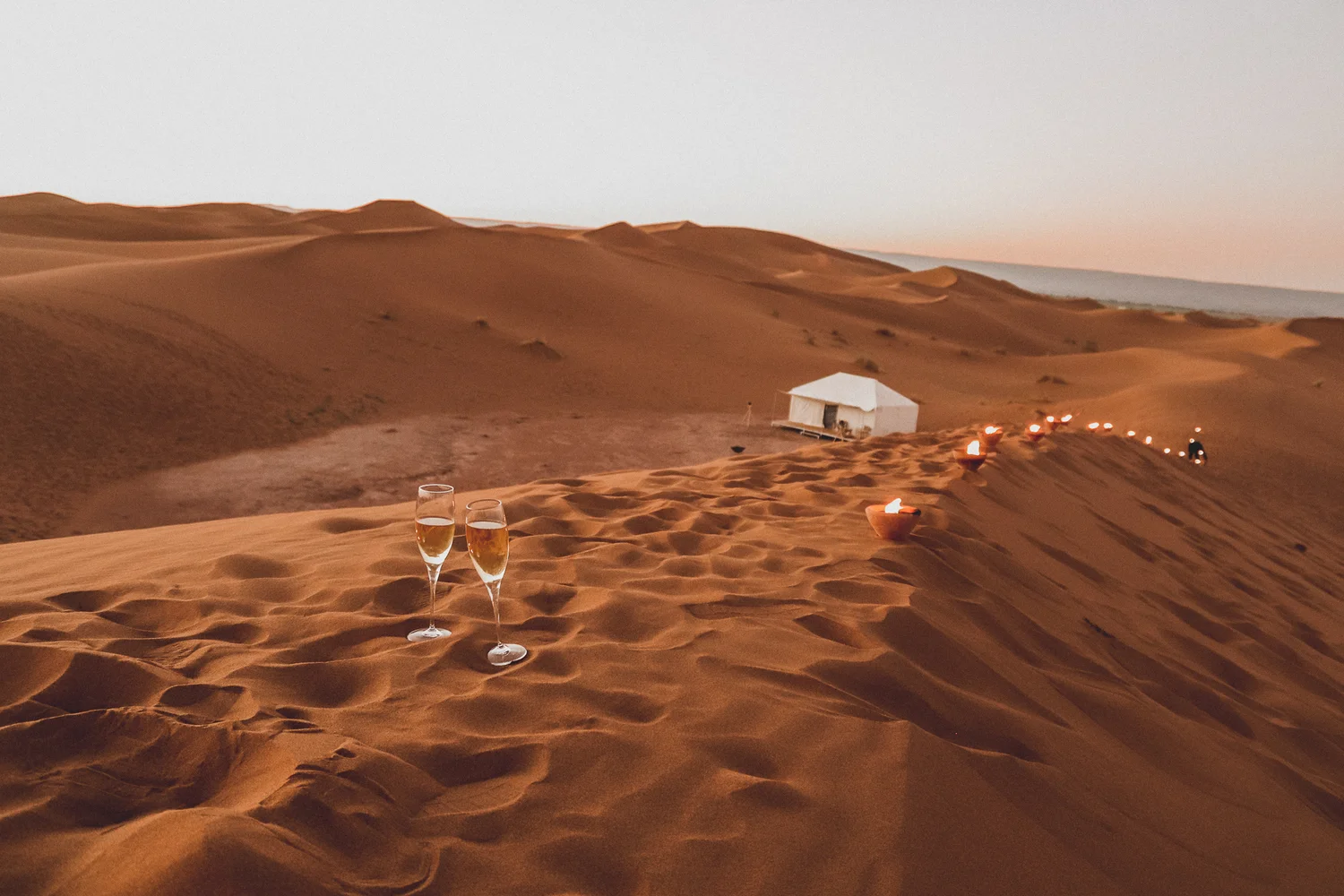
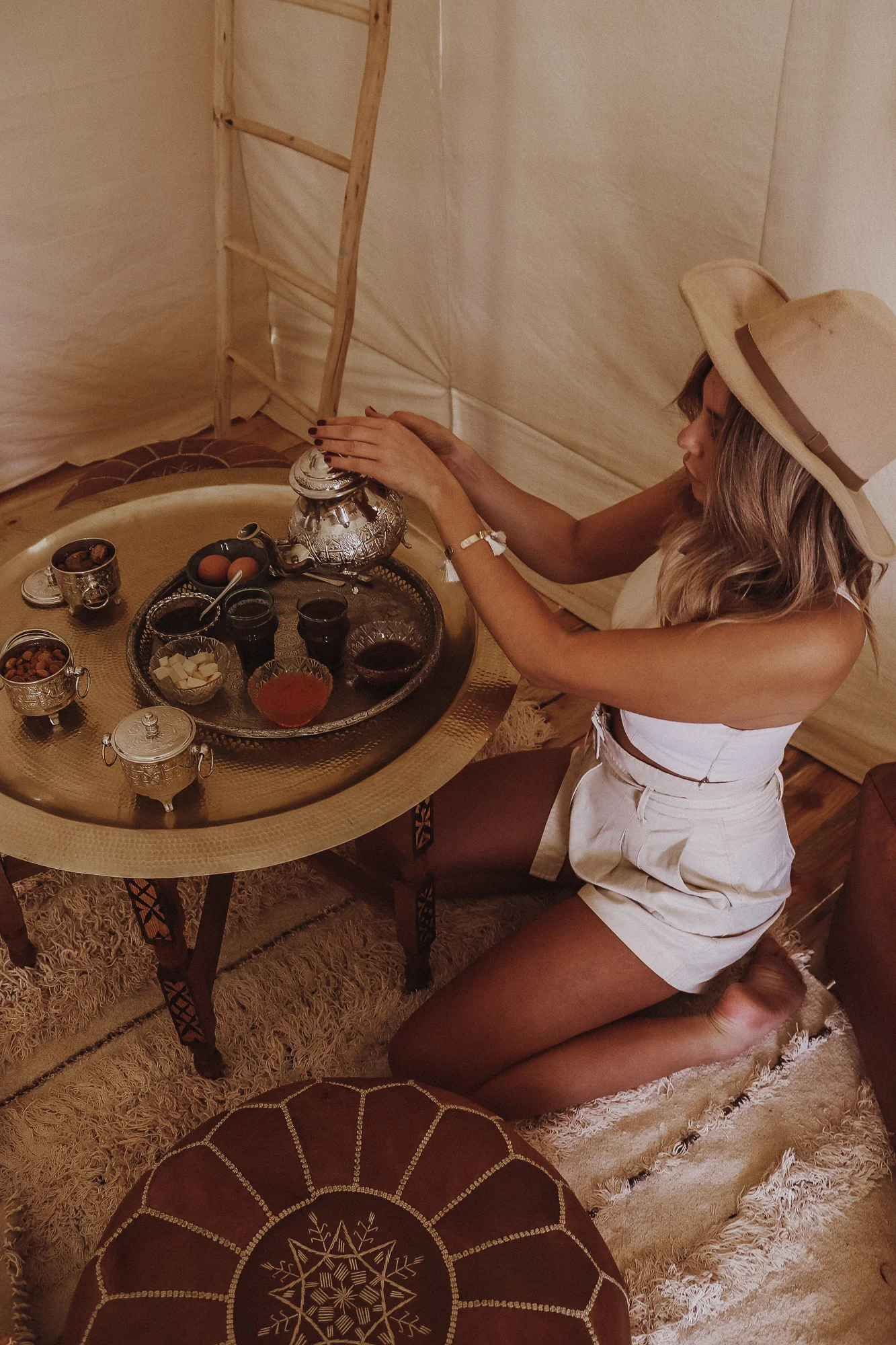
The family arrives via Marrakech, together or from different countries. From Marrakech it is a 4x4 journey over the Atlas and down the Draa valley, or a helicopter flight of 1 hour 40 from Marrakech Menara straight to the camp. The first evening belongs to arriving: tea, sunset on the dune, dinner together by candlelight.
The full days
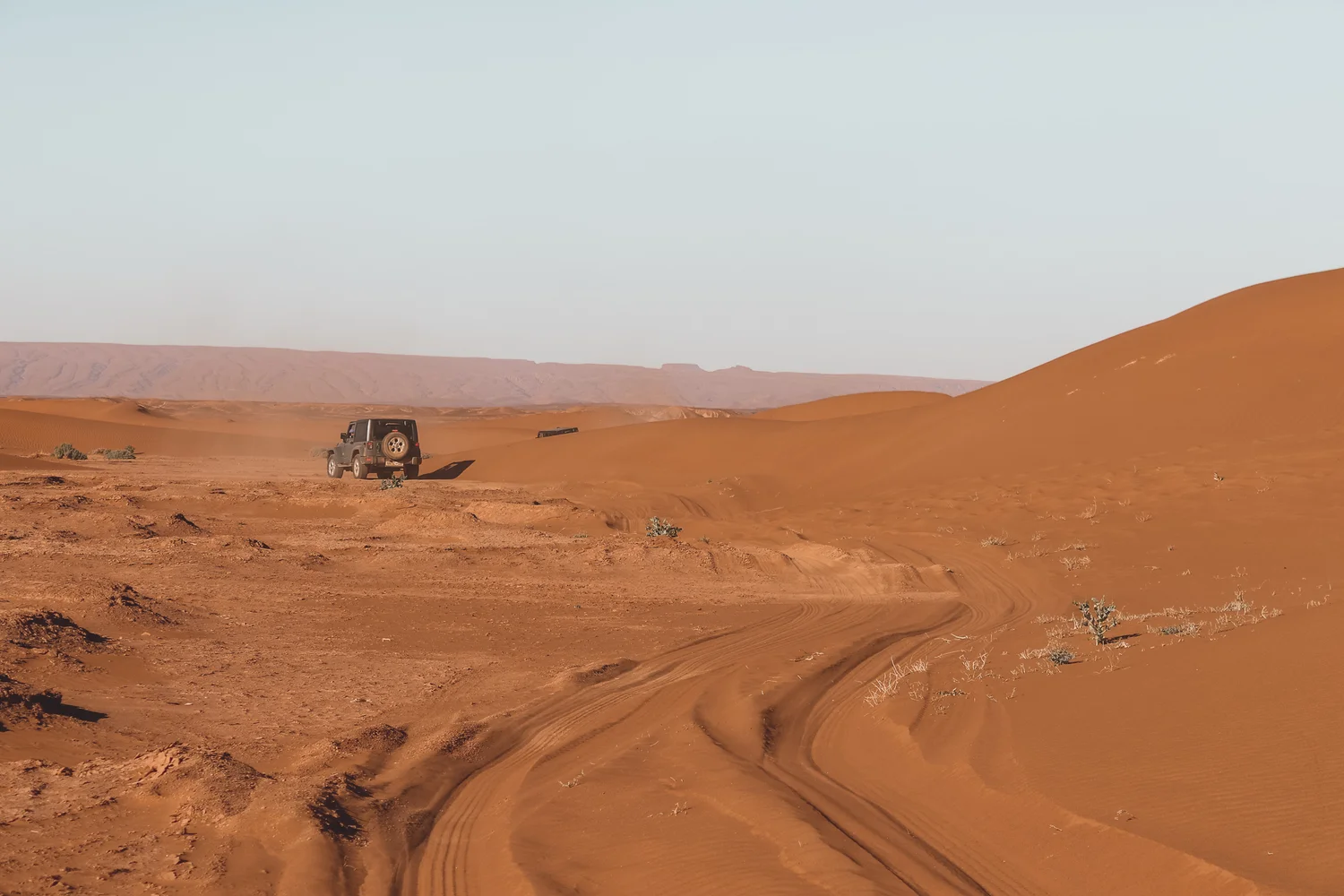
During the day, shared time and free time alternate. Camel rides, 4x4 outings into the dune sea, sandboarding for the younger ones, a Moroccan cooking class, sunrise walks, or simply reading on your own terrace. Nothing is compulsory, everything is possible, and because the camp is privatised, several programmes can run in parallel. The page on activities at the camp gives an overview.
The evenings are the heart of the reunion: a long table under the open sky, then the fire. At Erg Chegaga the sky is Bortle class 1, and the Milky Way stands over the camp so clearly that conversations grow quieter and more personal on their own. It is those hours by the fire that turn a gathering into an event.
The special evening
Most families plan one high point: a festive menu for the anniversary, Gnawa musicians at the fire, a slideshow of old family photographs on the canvas wall, speeches, surprises. The team shapes that evening around your wishes and otherwise stays discreetly in the background. The page on private celebrations in the Sahara shows what such evenings can look like.
Practical points for the planning
When to come: The camp is open from September to June and closed in July and August. School holiday windows suit family reunions particularly well: October, Christmas and New Year, February and Easter, when every generation can take time off.
Length: Two nights work, three nights are ideal. With only one night the journey remains the dominant experience.
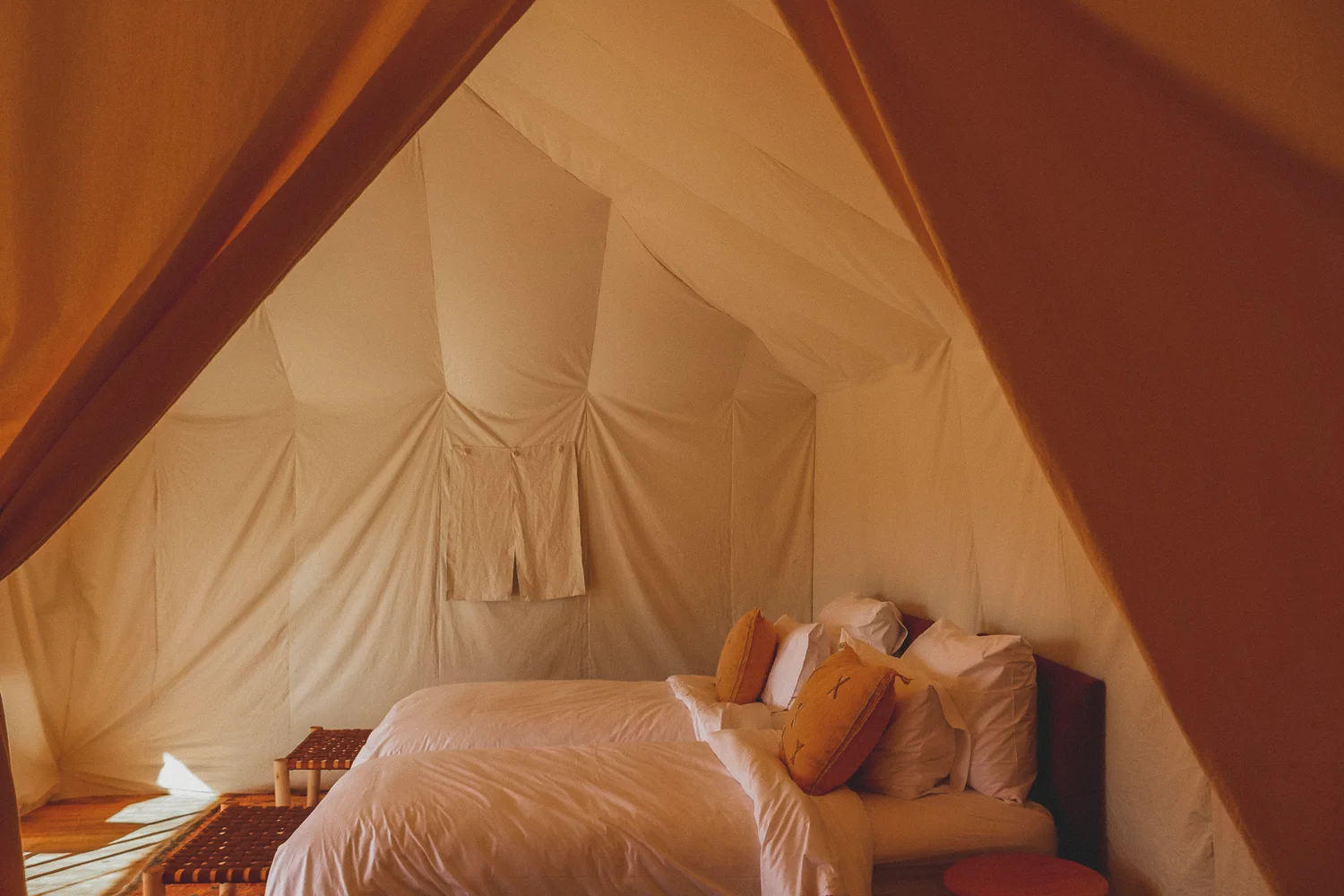
Comfort: Every tent suite has a proper bed, its own bathroom with shower and WC, and a private terrace. Details on the page about the camp.
Children: Expressly welcome. Sand is the best playground in the world, and the team is used to families. See also the guide to a family trip to the Moroccan desert.
Lead time: For a full privatisation during school holidays we suggest six to twelve months. Outside the holidays it often works at shorter notice.
Organisation: In our experience one person organises the reunion for everyone. We help with arrival planning for guests coming from different countries, with the menus and with a clear running order, so that the organiser gets to enjoy the reunion too.
Family reunions compared: desert camp against the classics
Anyone planning a family reunion usually weighs three options. An honest look at all three:
The rented country house or finca. Advantage: familiar and flexible. Drawback: the organising stays with the family. Someone cooks, someone shops, someone clears up, and it is usually the same people who do it at home as well. After three days of self catering for 14 people, the organiser needs a rest more than before.
The hotel or resort. Advantage: full service. Drawback: no privacy and no shared space of your own. The family spreads across corridors and restaurant tables, conversation happens in subgroups, and the setting belongs to the hotel, not to the family.
The privatised desert camp combines the two: full service as in a hotel, plus the exclusivity and intimacy of a house of your own, and on top of that a setting you will find neither in Tuscany nor on the Mediterranean. The one real drawback is the journey, and even that comes down to 1 hour 40 with the helicopter option.
Extending: desert plus Marrakech
Many families combine the reunion with two or three days in Marrakech, before or after. The city provides the contrast that the arc of a family journey carries well: first the crowds of the souks and a shared riad, then the complete stillness of the dunes, or the other way round. Our article on the 7 day Morocco itinerary through Marrakech, the Atlas and the Sahara describes a route that has proved itself.
What stays afterwards
The value of a family reunion is hard to measure. But there is one reliable sign: if the goodbye is not “that was lovely” but “let us do that again”, the place has done its work. The desert achieves that with a consistency that still surprises us after years. Not because it is spectacular, although it is, but because it gives a family what everyday life is shortest of: undivided time together in a place with no exits.
If you are planning a family reunion in a special place, write to us with the occasion, the dates and the number of people. You will have a written proposal with a running order within 24 hours.
If you want the whole camp to yourselves, from two to eighteen people, the page on renting a desert camp for your family covers everything else: the tents, the occupancy plan and travelling with children.
If the length is still open: how many nights in the desert shows what each additional night brings and what a day at the camp really looks like.