Anyone who has sat a silent retreat knows the paradox. You commit to saying nothing, and the world around you carries on regardless. The seminar house stands on a country road. In the monastery, the choir rehearses. At the retreat centre in Bali, traffic hums behind the wall while pans clatter in the kitchen for the next group. Your own silence becomes an island in a sea of noise.
There are places where that paradox does not arise. The Sahara is the most accessible of them. At Erg Chegaga, the great sea of dunes in southern Morocco, silence is not a rule you keep. It is the ordinary state of things, and you step into it.
What Silence in the Desert Actually Means
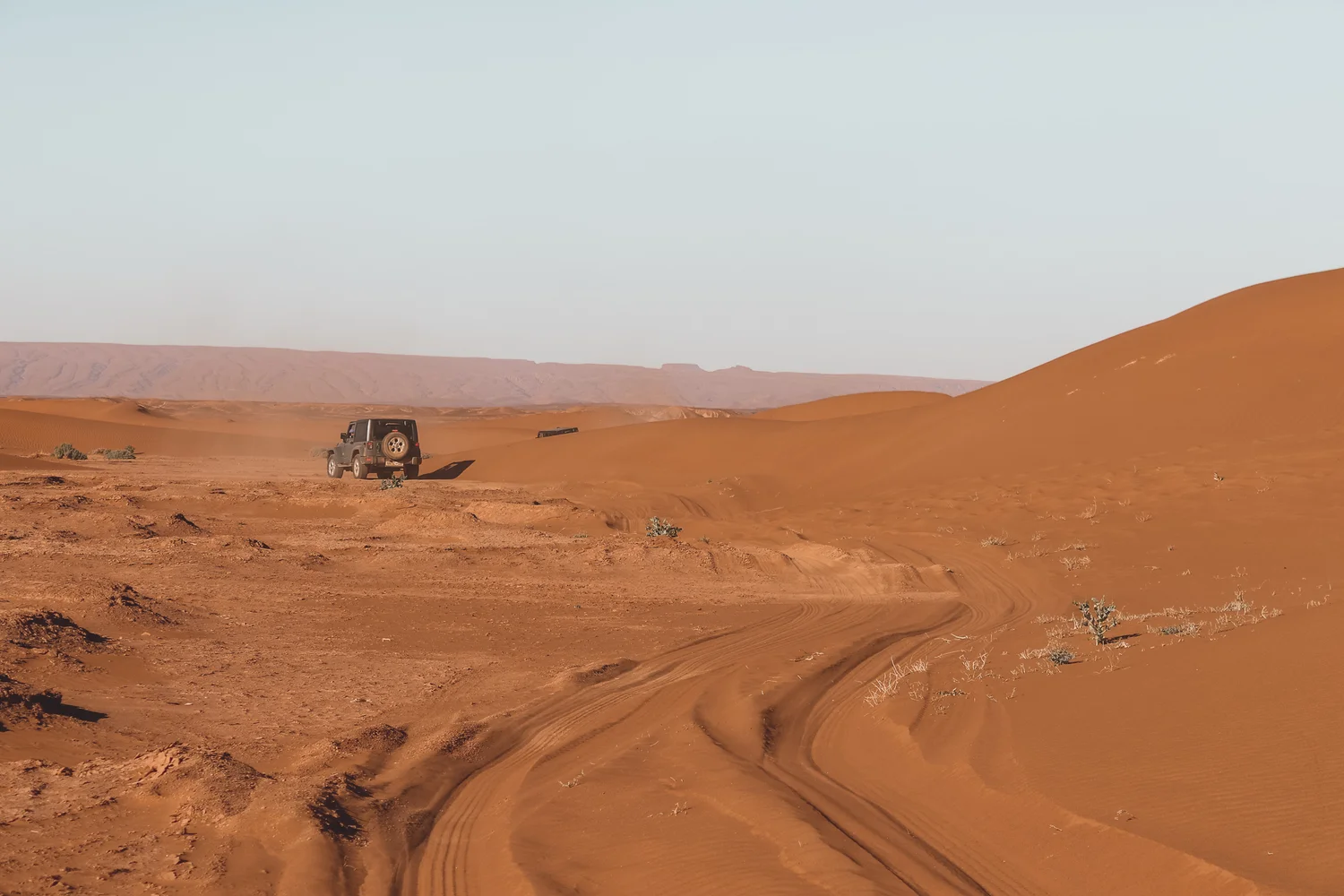
Erg Chegaga lies 60 kilometres beyond M’Hamid El Ghizlane, the last town on the road south, and the final stretch is an hour and a half of track. No traffic, no flight path, no farming, no neighbours. What remains is an acoustic environment most people have never encountered: when the wind drops, you hear your own blood in your ears.
There is no phone signal in camp either. The only place a bar appears is the top of the great dune, about twenty minutes there and back, which is far enough that most people stop checking after the first day. The experience is unsettling at the start. The brain, used to a permanent carpet of sound, hunts for signals and finds none. After half a day something settles. After two days, participants regularly describe a state they know from no urban retreat: the silence no longer costs any effort. It carries them.
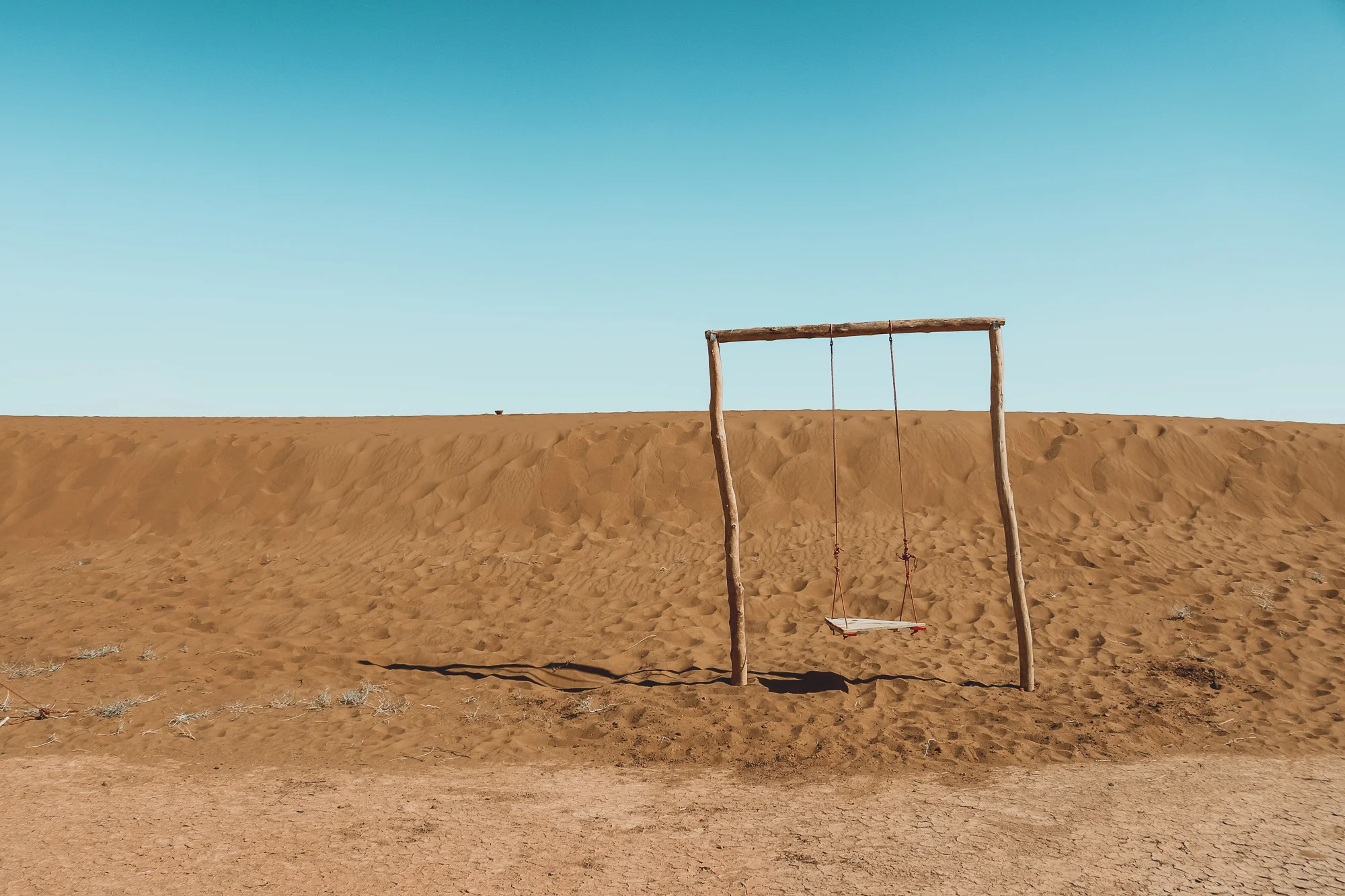
Then comes the second quality of the desert, its visual calm. In every direction the eye meets sand, sky and horizon. No advertising, no screens, no architecture. And at night a sky rated Bortle 1, the darkest class on the scale. An evening of silence under the Milky Way replaces any closing meditation.
The Setting: A Camp With No Borrowed Noise
Silence needs more than a landscape. It needs a house that plays along. Umnya Desert Camp is made of eight tent suites, each with its own bathroom, for two to eighteen guests and up to twenty with extra beds, and for silent retreats it is taken over entirely. That is the condition which sets this format apart from almost every other retreat venue:
- No other guests. No parallel group, no hotel operation, nobody taking a call at the next table. The camp receives one group at a time, so the only people present are yours and a team that works without a sound for the length of the retreat.
- A team that understands silence. The hosts are used to serving with gestures, written notes or nothing at all. Meals appear without a word being needed.
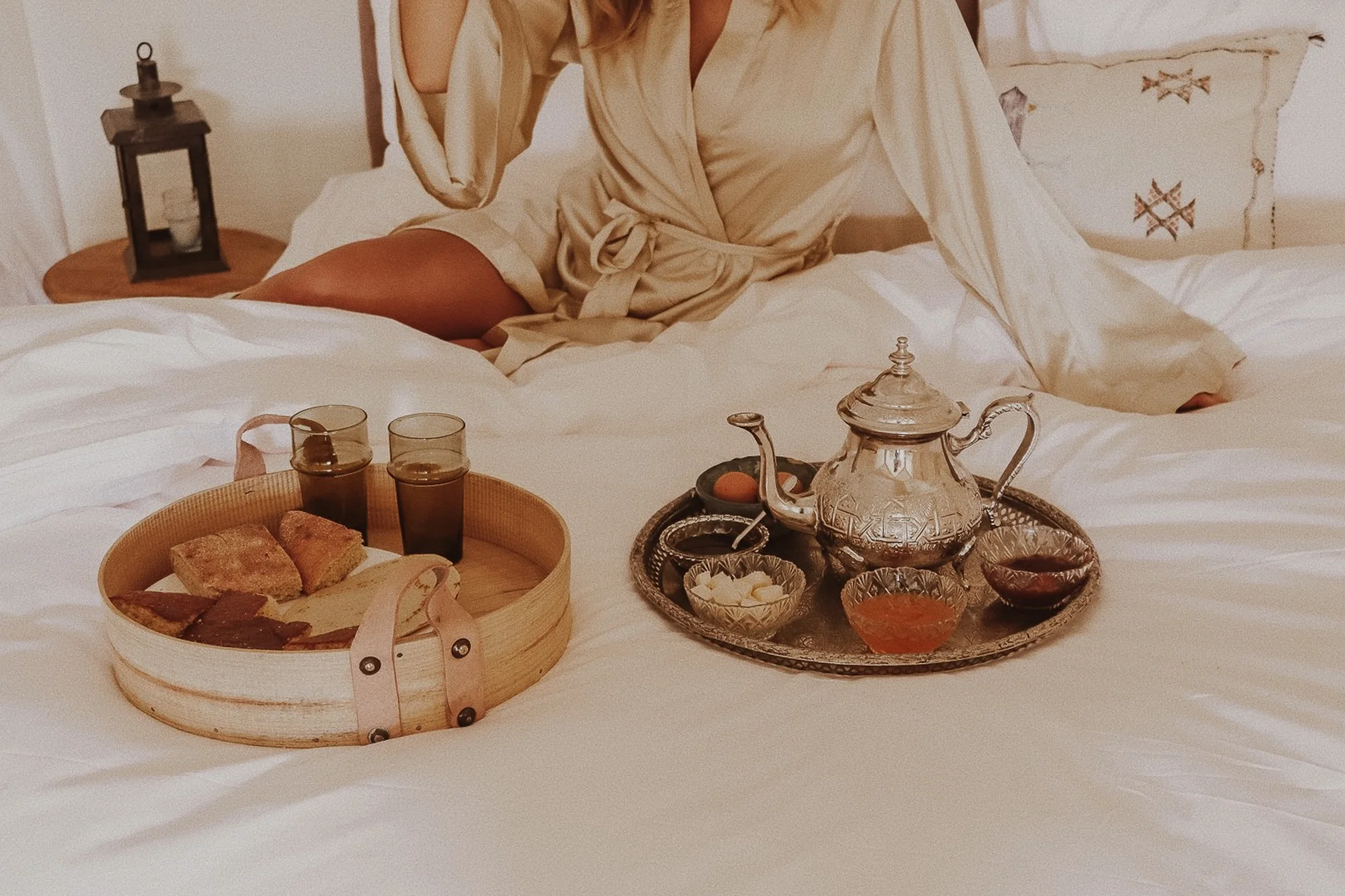
- Places for practice and for withdrawal. Sitting spots on the dune and inside the camp, a fire for silent evenings, and every suite with its own terrace, its own bathroom and a real bed. Anyone who wants to withdraw has a full private room, with the details on the page about the camp.
For Hosts: The Most Consistent Silent Setting Available
If you teach silent retreats, whether Vipassana influenced, contemplative Christian or method free, you know the underlying problem. You can guide the inner discipline of a group, but you cannot control the world outside. A privatised desert camp solves that structurally.
A six day format that has proved itself:
Day 1: Arrival from Marrakech through the Draa Valley, settling in, an opening evening, a last conversation together, silence beginning at nightfall.
Days 2 to 5: Full silence. Sitting practice on the dune in the early morning, walking meditation in the sand, meals in silence, individual conversations with the teacher on request, evenings of stars or fire. On one day, a long silent walk into the dunes with a local guide who knows the art of leading without words. How those walks unfold is described in our piece on silent trekking with nomads.
Day 6: Breaking silence in the morning, a closing circle, the journey back.
The camp takes two to eighteen guests, twenty with extra beds, which sits close to the ceiling most teachers already set for intensive formats. The site is privatised as a whole, at a single price for the entire camp, set case by case according to each request. How we work with hosts: host your retreat.
For Solo Guests: Silence Without a Group
Not everyone looking for silence wants a guided retreat. Some simply want a few days of not speaking, not being reachable and not having to explain why. For these guests, often people in a period of transition, after intense working years or before a large decision, the camp offers quiet solo stays: a suite, meals served or left ready as preferred, no programme at all, nobody addressing you. The team is present and invisible at the same time.
We have described related formats elsewhere: the spiritual retreat in the desert and the digital detox retreat in the Sahara. What sets a silent retreat apart is how far it goes. Here, not speaking is not a side effect. It is the centre of the stay.
What Silence in the Desert Does to People
No therapeutic promises, and the camp is neither a clinic nor a place of treatment. But after many seasons of watching: the combination of acoustic silence, visual emptiness and the absence of digital stimulus works faster than the same practice in familiar surroundings. Guests usually say their sleep deepens from the second night, which we wrote about in a separate piece on sleep in the Sahara. Thoughts that circle at home settle into some order. And almost everyone reports the same moment towards the end: the silence that felt at first like giving something up suddenly feels like something owned, and handed back reluctantly.
Silence With Structure: The Building Blocks of a Desert Retreat
Silence needs vessels, or it runs away. These elements have proved themselves in silent formats at Erg Chegaga and combine freely:
The morning dune. Seats on the crest, taken before sunrise. The slow arrival of light over the sea of dunes is a meditation that needs no instruction. Many teachers place the longest sitting of the day exactly here.
Walking meditation in sand. Soft ground slows every step by itself and makes walking felt in a way no firm surface does. The paths around the camp are safe and easy to read, and a guide accompanies longer silent walks.
Meals in silence. The team serves without speaking, the table set facing the dunes or in a space of its own. Moroccan cooking, deliberately plain when the format calls for it.
The silent evening by the fire. No programme, no conversation, only fire and stars. In the feedback afterwards, the most frequently named moment of the whole retreat.
The individual conversation. Hosts running guided formats use a separate tent or a spot away from camp for short daily conversations with participants, without touching the silence of the group.
Why Not Simply a Monastery?
It is a fair question. Silent exercises in monasteries have a tradition centuries old. The answer lies in three differences. First, exclusivity: in a monastery you are the guest of an existing order, in a privatised camp the whole place belongs to your group. Second, landscape: a cloister is a frame around silence, the desert is silence, in every direction, as far as the horizon. Third, comfort: someone who sleeps well at night and feels physically at ease during the day can give themselves to the inner work instead of holding out against the circumstances. Both formats have their place. But anyone looking for the most complete silence available will not find it behind walls. They will find it where there is nothing that could make a sound.
Practical Notes
Season: The camp is open from September to June and closed in July and August. From October to April the days run between 18 and 28 degrees. In December and January, 18 to 24 by day and 2 to 8 at night, with long, star filled nights.
Length: For guided silent retreats we suggest five to seven nights, for quiet solo stays at least three. The silence starts to work on the second day. Everything before that is arriving.
Getting there: From Marrakech by four wheel drive, 8 h 45 on the road of which 1 h 30 is track, or by helicopter in 1 h 40. Some hosts use the long drive deliberately as a passage: civilisation grows quieter kilometre by kilometre.
Preparation: No meditation experience is needed to benefit from silence, only the willingness to spend a few days with yourself and no distraction. What to bring is in our Sahara packing list.
Whether you are a host with a group or a guest on your own: if you are planning a silent retreat in a place where silence is not claimed but given, write to us with your dates and your format. You will have a concrete proposal in writing within 24 hours, by email, with no phone call, which suits the subject.