Astrophotography Retreat Sahara Bortle 1
Bortle Class 1, and what that number actually means
Erg Chegaga is rated Bortle Class 1, the darkest classification on the scale. There are very few places left that hold it, and almost none with a bed, a bathroom and dinner attached.
At this classification the Milky Way casts a visible shadow. The zodiacal light is obvious rather than theoretical. Airglow is visible to the naked eye. M33 resolves without optics for most people, and the Andromeda galaxy shows structure rather than a smudge.
There is no light dome on any horizon. The nearest town of any size is sixty kilometres away past the last paved road, and it is small.
The practical conditions
Humidity here is low almost every night, which matters more than most people expect: it is what keeps a lens from dewing and what makes a four hour integration possible without a heater strap.
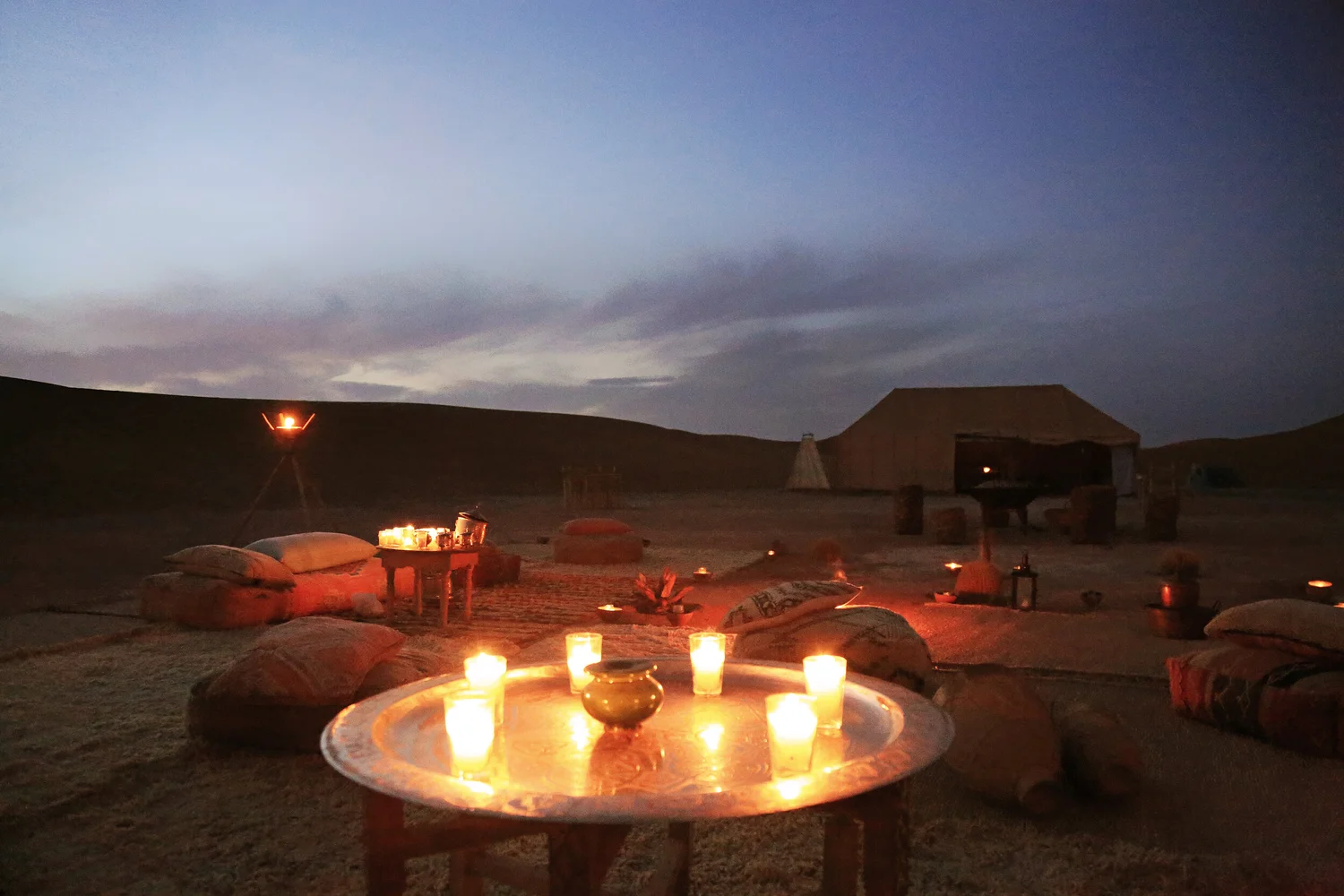
The camp runs generators, and we shut them down on request. Ask, and the site goes fully dark, including tent lanterns. Nobody will walk past your frame with a head torch.
The season runs October to April. The Milky Way core is best from February through April, rising before dawn early in that window and moving earlier each week. New moon windows are the ones that book first, and we hold them for photographers rather than releasing them generally.
What we provide
A flat, stable setup area away from foot traffic, with power.
Chairs, a table and hot drinks at three in the morning, which sounds minor until the third night.
A guide who will drive you to a specific foreground before dark and wait, so you are not scouting a dune in the dark on your own.
Our own telescope and an astronomer on one night of every stay, which is more useful for the people travelling with you than for you.
What to bring
A tracker if you want deep sky. A wide fast lens, fourteen to twenty four millimetres at f2.8 or faster, for landscape astro. Spare batteries, because the nights are genuinely cold and batteries drain.
We can charge everything overnight. There is power in every tent.
Being honest about the risk
The one thing we cannot control is dust. Two or three times a season the wind picks up and the sky goes milky for a night or two. It is not common and it is not predictable. Anyone booking a single specific night for a single specific shot should know that before paying.
Who this suits
Photographers travelling alone or in pairs, workshop leaders bringing a group, and camera brands running a product shoot. We have hosted all three.
How to come
Three to seven nights, October to April, camp privatised. Tell us your dates, whether you need a new moon, and how many of you there are, and we will send the programme and the terms in writing before anything is paid.
