The short answer. An offsite with no wifi works when the online part of the work is moved before and after it: the decisions to be taken are defined in advance, the papers are printed or downloaded, each executive has a deputy at the office, and one agreed person walks to a signal at a fixed time each day. At Umnya Desert Camp, in the Sahara, there is no wifi and no mobile signal; a signal can be found a short walk away, about twenty minutes there and back.
At a glance
| When | What to do |
|---|---|
| Three weeks before | Write the three to five questions the offsite must answer; brief the participants |
| Two weeks before | Name a deputy for each executive; agree what counts as urgent |
| One week before | Send pre-reads; print board papers; download every file people will need |
| Before leaving | Out-of-office messages; tell families the dates and how messages will reach the group |
| On site | One signal walk a day at a fixed time; papers collected after each session |
| On the way back | A short block to triage messages before anyone reopens the full inbox |
Why teams choose to go offline
Most offsites lose their best hours to the phone: a call that cannot wait, an email answered between sessions, a participant who is present in body only. Going somewhere with no network removes the choice. Nobody has to be the one who puts the phone away first.
Teams describe the effect in similar words: longer conversations, fewer interruptions, decisions that had been postponed returning to the table. We wrote about it in what changes when a leadership team does an offsite in the Sahara.
Before you leave
Define decisions, not updates
An offline offsite is a poor place for status reports, which need live data. It is a good place for a small number of decisions or questions that need time. Write them down three weeks ahead and send them to everyone.
Move the reading forward
Send pre-reads a week ahead. Print what the sessions need, and ask participants to download any document they want to consult, since nothing can be opened from the cloud at the camp. Bring paper materials for the sessions: notebooks, cards, markers. Tell us what you need in the working space and we will confirm what can be set up.
Organise cover at the office
Each executive names a deputy with clear authority for the days away. Agree in writing what counts as urgent, and who decides. Most of what feels urgent on day one turns out to wait easily.
Tell the families
Give families the dates and explain how messages will reach the group: through the office, checked at a fixed time each day. People accept being offline much more easily when the people at home know what to expect.
On site
- One signal walk a day. A signal can be found a short walk away, about twenty minutes there and back. Many teams give one person the task, at a fixed time, to check messages for the whole group.
- Power. The camp runs on solar energy. Arrive with devices charged, bring a power bank, and tell us before arrival what the group needs to charge. Laptops are useful for offline writing; they are not needed for much else.
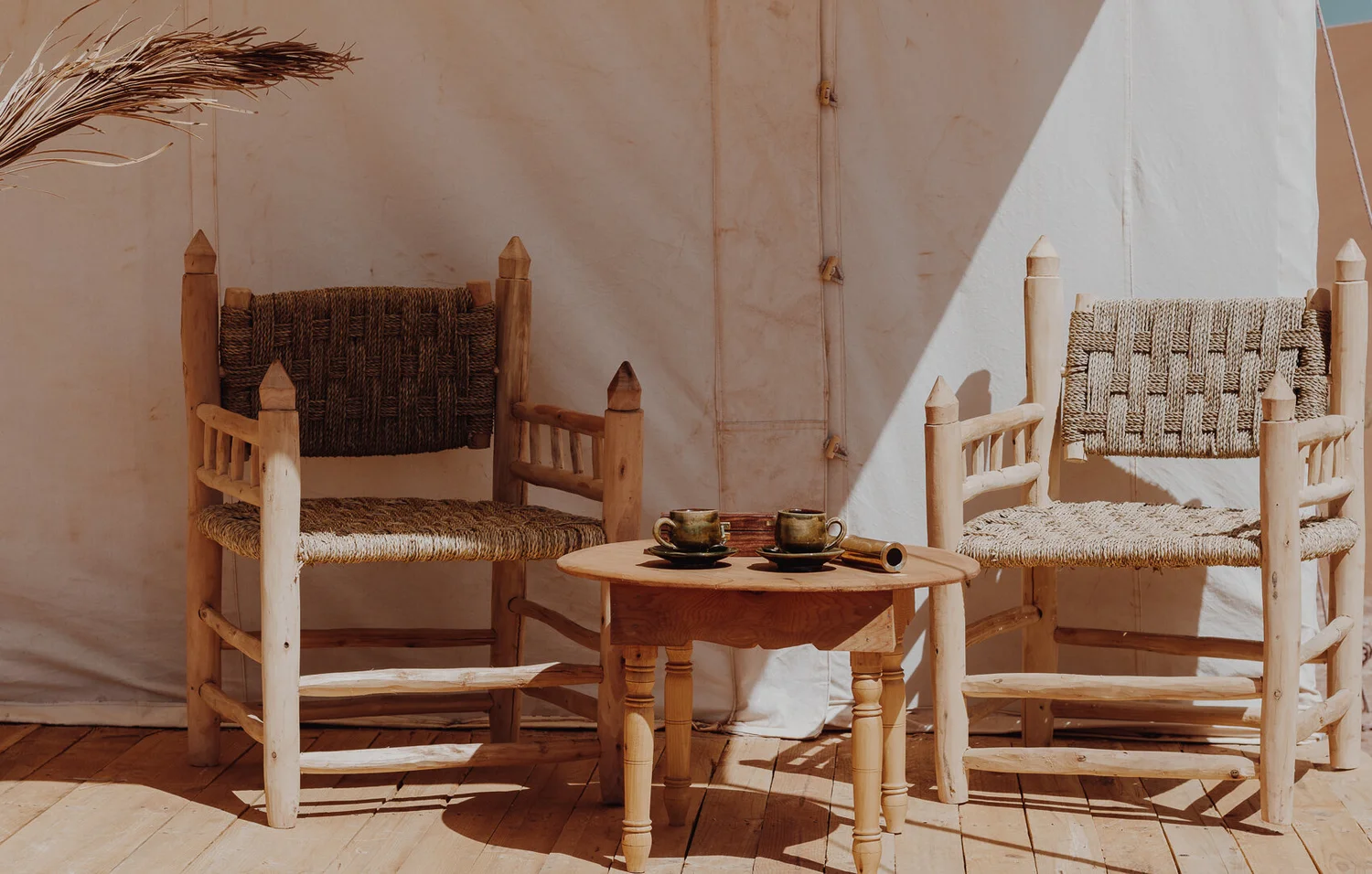
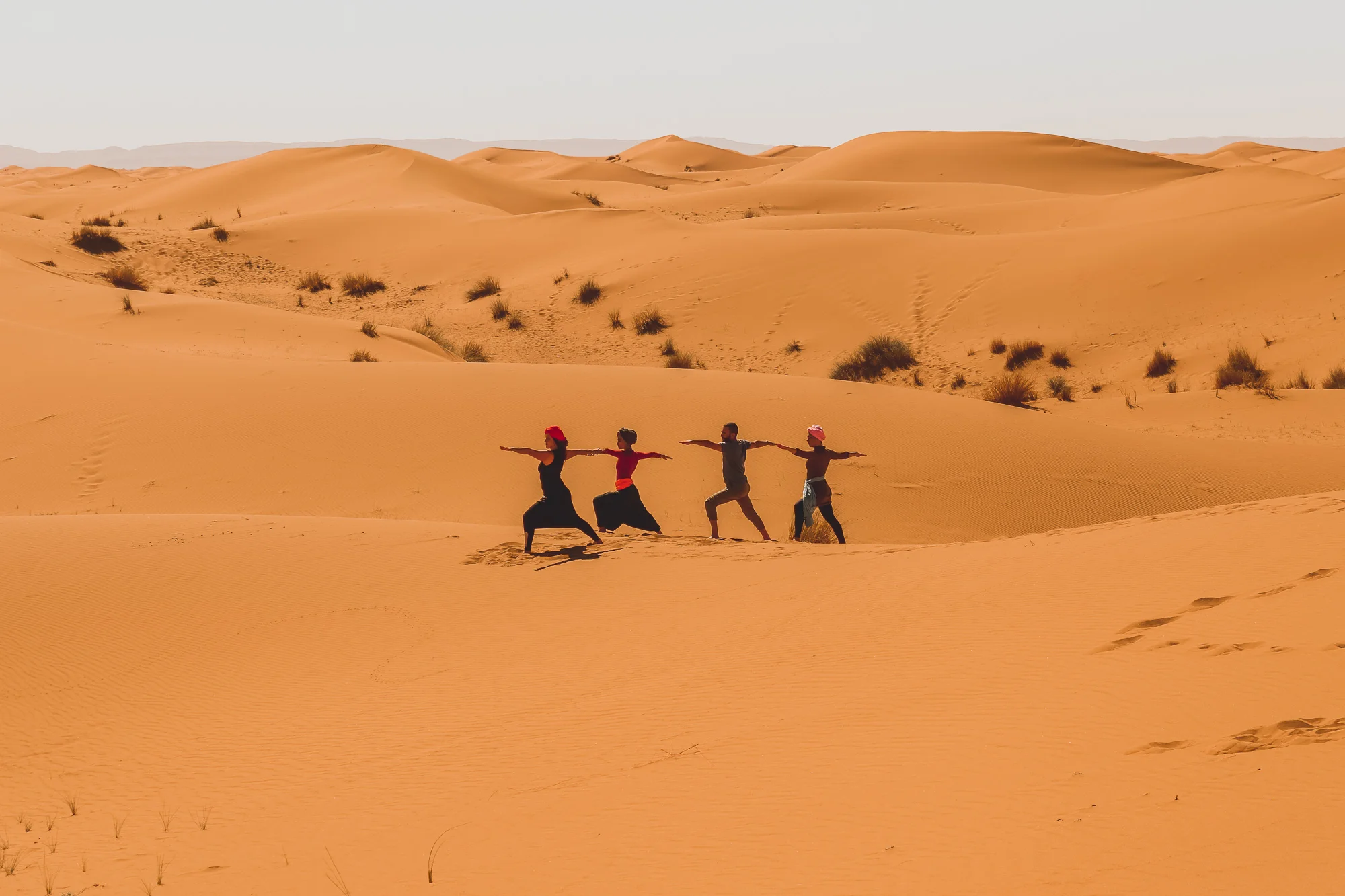
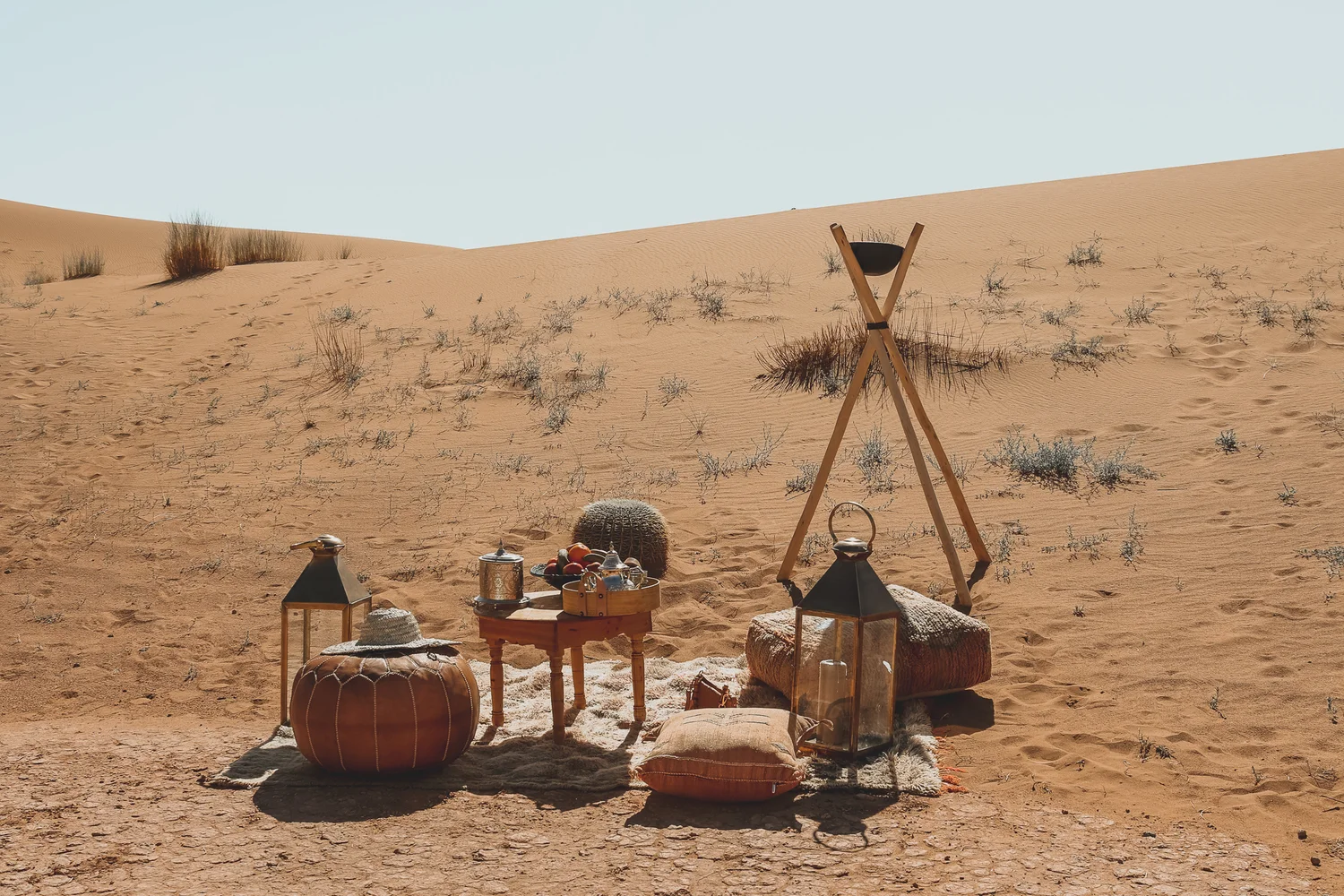
- The working space. A tent, a shaded terrace or the open dunes. Sessions in the morning, a shorter one late in the afternoon, and free time in between.
- Confidentiality. A non-disclosure agreement on request, no photographs of guests, and printed papers collected at the end of each session.
- Evenings. Dinner together, a fire and a Bortle 1 sky. This is where much of the real conversation happens.
For boards: a few extra points
If the board will take formal decisions, check quorum, notice and minute requirements with counsel before you travel, and prepare the papers to be signed on paper. Bring the board pack in printed form, numbered, and agree who takes it home. None of this is specific to the desert, but the absence of network makes it impossible to fix on the day.
Coming back online
The signal returns on the way back towards M’Hamid. Plan a short block, thirty minutes in the vehicle or at the first stop, for each person to triage messages, then a longer one the next morning. Agree before leaving the camp what the team will communicate, to whom and when, so that the decisions of the offsite reach the organisation in one voice.
Where to hold it
Umnya Desert Camp is in the dunes of Erg Chegaga, beyond M’Hamid El Ghizlane, the last village at the end of the road. Eight tent suites with private bathrooms host from 2 to 18 guests, up to 20 with extra beds. The camp is shared by default; privatisation of the whole camp is possible for any request, subject to availability, and quoted on request. Open from September to June; October to April is the most pleasant period.
Access: about 8 hours 45 by road from Marrakech; a flight from Casablanca to Zagora, then about 3 hours by 4x4; or a helicopter from Marrakech, about 1 hour 40, landing at the camp. See how to get to Erg Chegaga.
For the format, read board offsite in Morocco and executive offsite in Morocco. If the aim is personal rather than collective, the camp also runs a Digital Detox Retreat and a Digital Detox Weekend; the programme and prices are sent by email from get the programme.
Next step
Send us your dates, the size of the team and the questions the offsite must answer, at reservations@umnyadesertcamp.com or through the contact page. A written proposal comes back within 24 hours.