
Most of us sleep in rooms that are never fully dark: a standby light, a street lamp through the curtain, a phone face down on the table. We stop noticing. In the Sahara, you notice the difference on the first night.
What Bortle 1 means
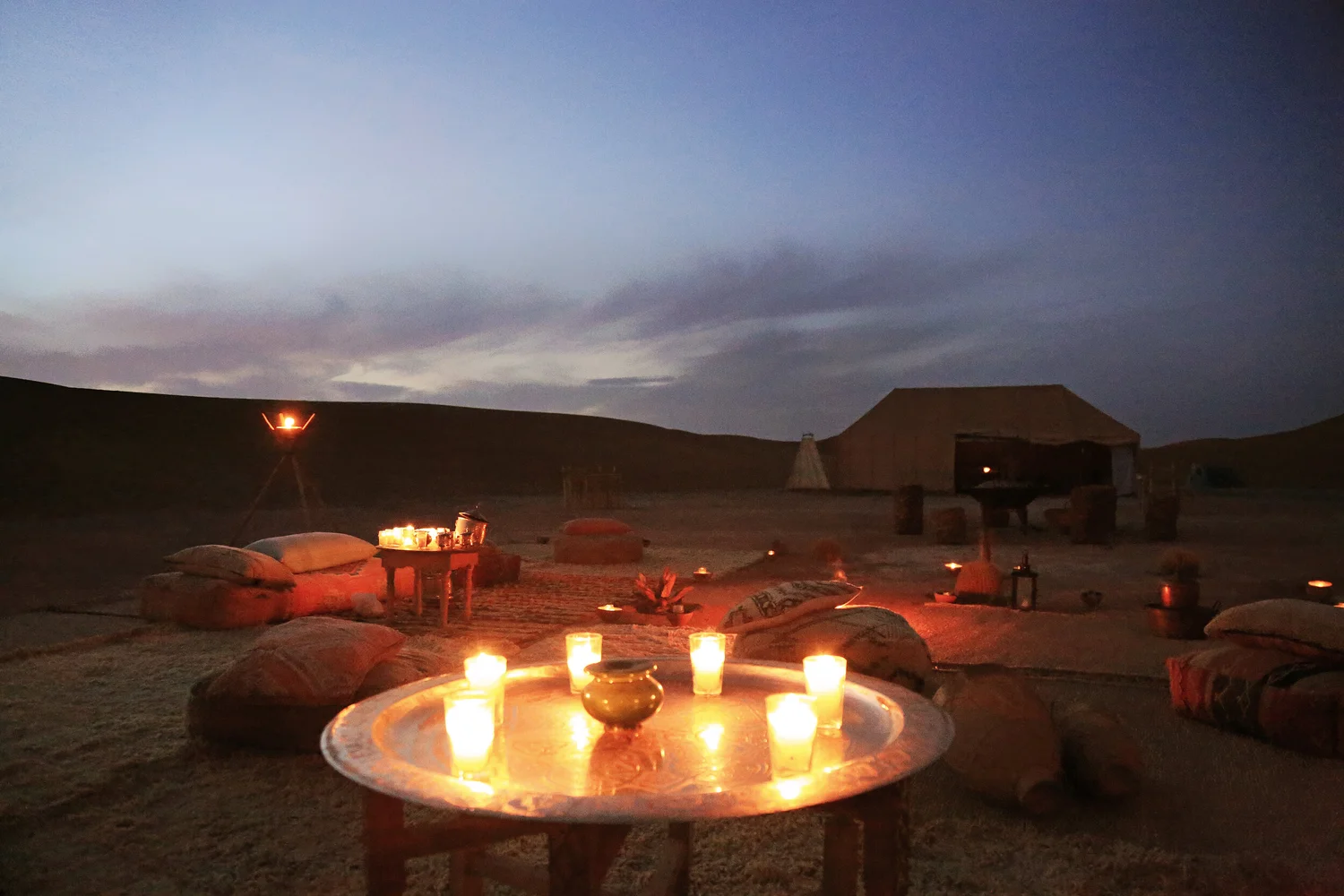
The Bortle scale ranks the darkness of the night sky from 1, the darkest, to 9, a city centre. Umnya Desert Camp sits in the dunes of Erg Chegaga, sixty kilometres of desert piste beyond the last paved road, and its sky is rated Bortle 1. It is the darkest class on the scale, the kind of sky where the Milky Way is easy to see with the naked eye.
Why darkness is the first thing we look for
Most general sleep advice asks for the same few things: daylight in the morning, less screen time in the evening, and a dark, quiet room. The first two are habits. The third depends on where you are. A sleep retreat gives you all three at once, and a place with a Bortle 1 sky gives you the darkness without any effort.
What a night at the camp is like
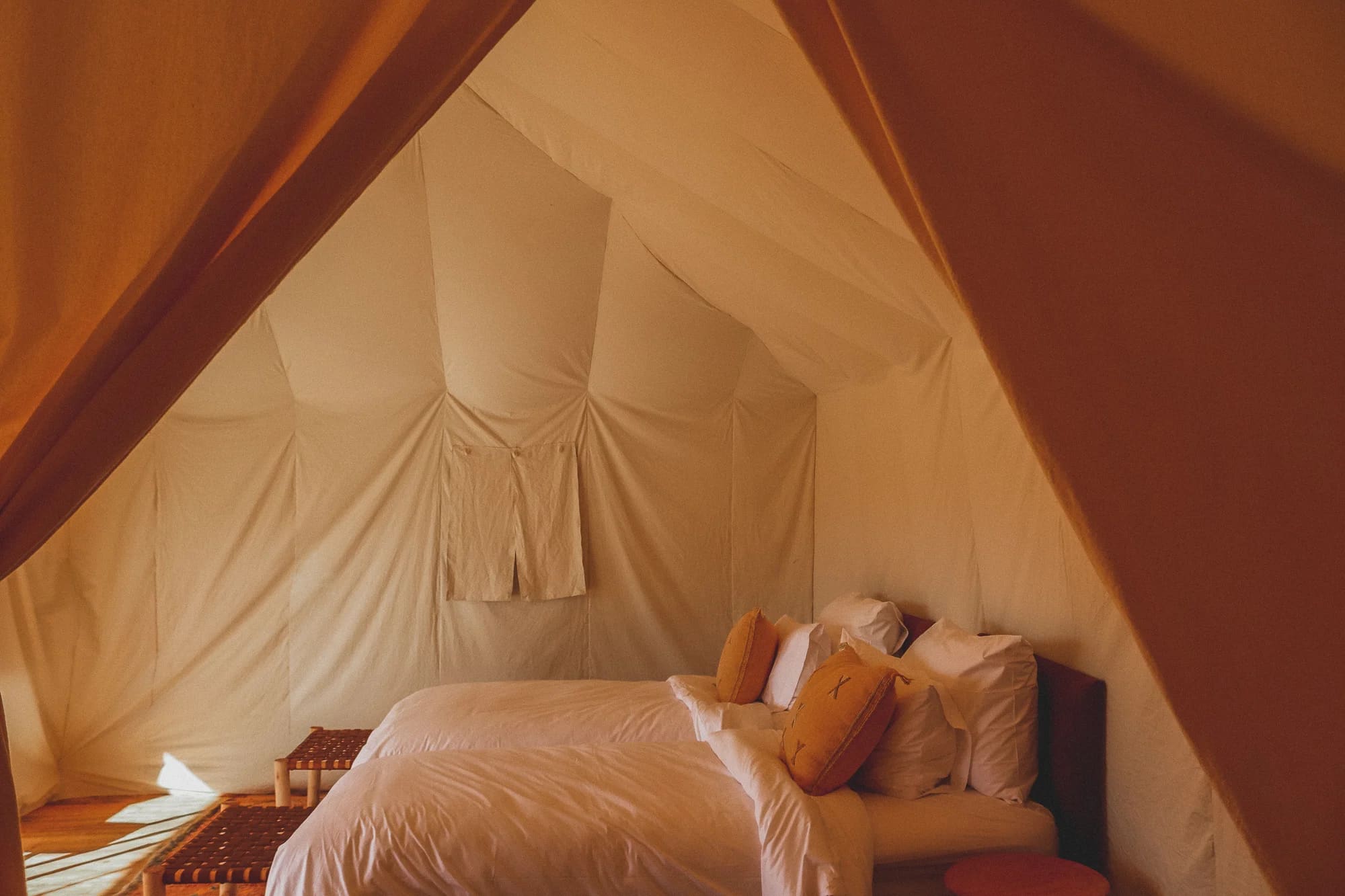
There is no wifi and no network in the camp. Phones are stored on arrival, so there is no glowing screen at the end of the evening. Each guest has a tent suite with a real bed and a private bathroom. After dinner by the fire there is a herbal infusion, and one evening we run a session with our astronomer and a telescope under the stars. On one night of The Sleep Programme, guests sleep in the dunes, under the open sky, with the team close by.
A note of honesty
Darkness is a condition for a good night, not a cure. We treat nothing and diagnose nothing. If you live with a sleep disorder, speak to your doctor before you come.
Read about The Sleep Programme, five days from February 2027, or about stargazing at the camp.