Someone always ends up organising this, and it is usually not their job. If that is you, this is the article we would have wanted you to read before the first email.
Decision one: one arrival window, or several
This is the decision that shapes everything else, and most organisers make it accidentally.
One window. Everyone lands at Marrakech within a three to four hour band on the same day, and the group travels together in a convoy. It costs less, it is far simpler for us, and the group starts bonding in the vehicles rather than at dinner.
Several windows. People arrive across a day or two, and each arrival needs its own vehicle and driver. It is more comfortable for the travellers and considerably more expensive, and it means your first evening is missing people.
Our advice for anything with a programme, which means retreats, offsites and trainings, is one window, held firmly, even if two people have to fly a day early and overnight in Marrakech. The alternative is a first session with four empty chairs.
Decision two: the road or the helicopter
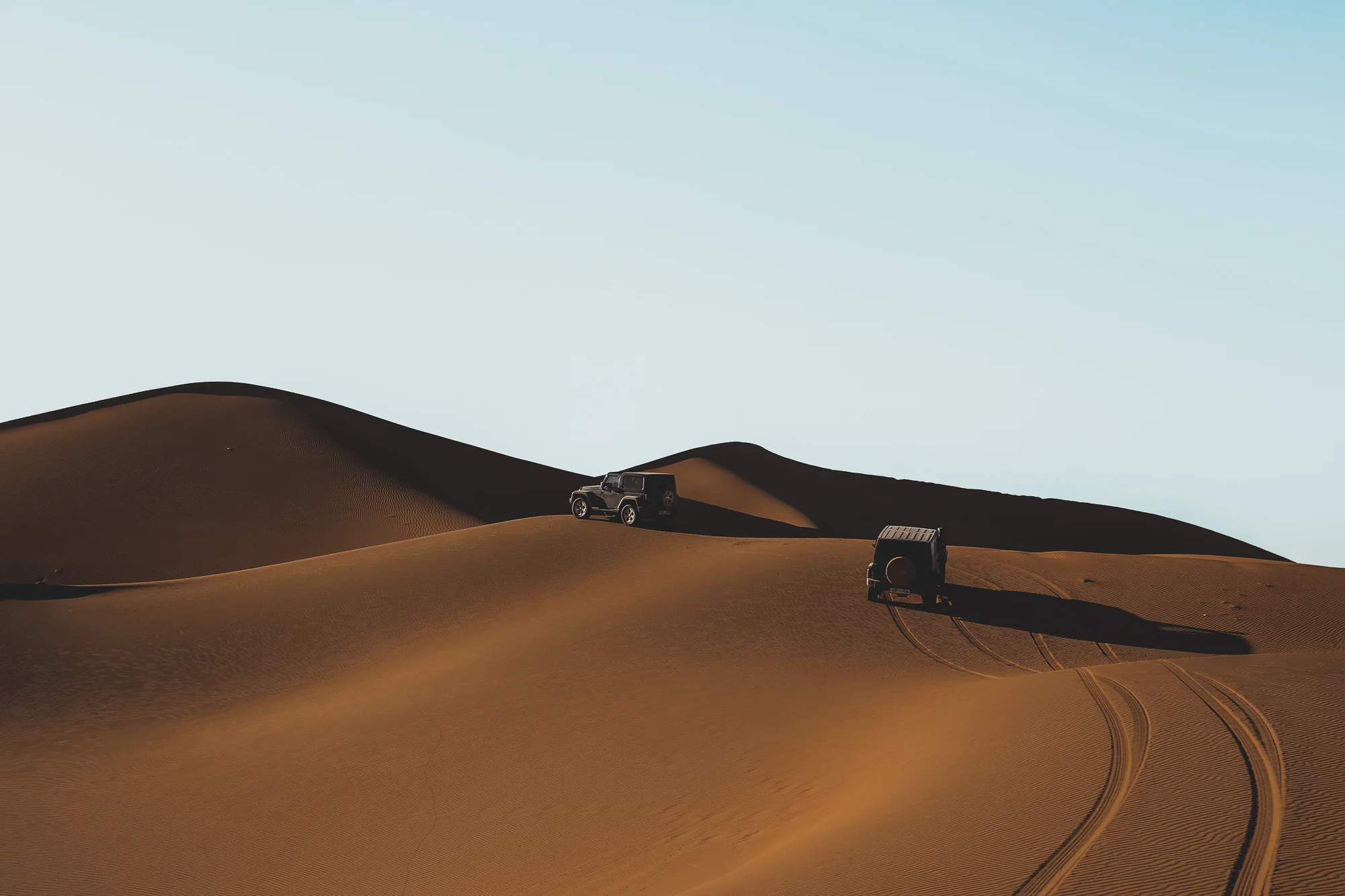
By road. Marrakech to the camp is about 8 hours 45 in 4x4s, over the Tizi n’Tichka pass, down through the Draa valley, then sixty kilometres of piste at the end. For a group of sixteen that is four vehicles with drivers. It is long, it is genuinely beautiful, and the last hour is bumpy.
For many groups the road is the right answer, and not only on cost. The descent from the Atlas into the desert is a piece of narrative that does real work: people arrive having watched the country change, which is very different from arriving having watched a screen.
By helicopter. One hour forty from Marrakech, landing at camp. Five to six seats per rotation. The rotation is charged whether or not the return leg is used.
The point to hold on to: a rotation is charged whole, whether it flies full or not. At twelve or eighteen the seats are full; at thirteen an extra rotation goes up for one person, and we look at the best way to arrange it with you.
There is also a counter-intuitive point. Because the rotation is charged in both directions regardless, returning by road saves nothing. It costs the convoy on top. If you have paid for the flights, use them, or let each guest choose.
The realistic middle. Many groups fly in and drive out, or the reverse, so that everyone gets the valley once without spending two full days in a vehicle.
Decision three: what you tell people to pack
Group organisers underestimate this and pay for it on the second morning.
Nights from October to April run cold, between two and eight degrees Celsius in midwinter and eight to fifteen in the shoulder months. Days are fifteen to twenty-six. A group that packed for “the Sahara” and brought only linen will be cold and will say so.
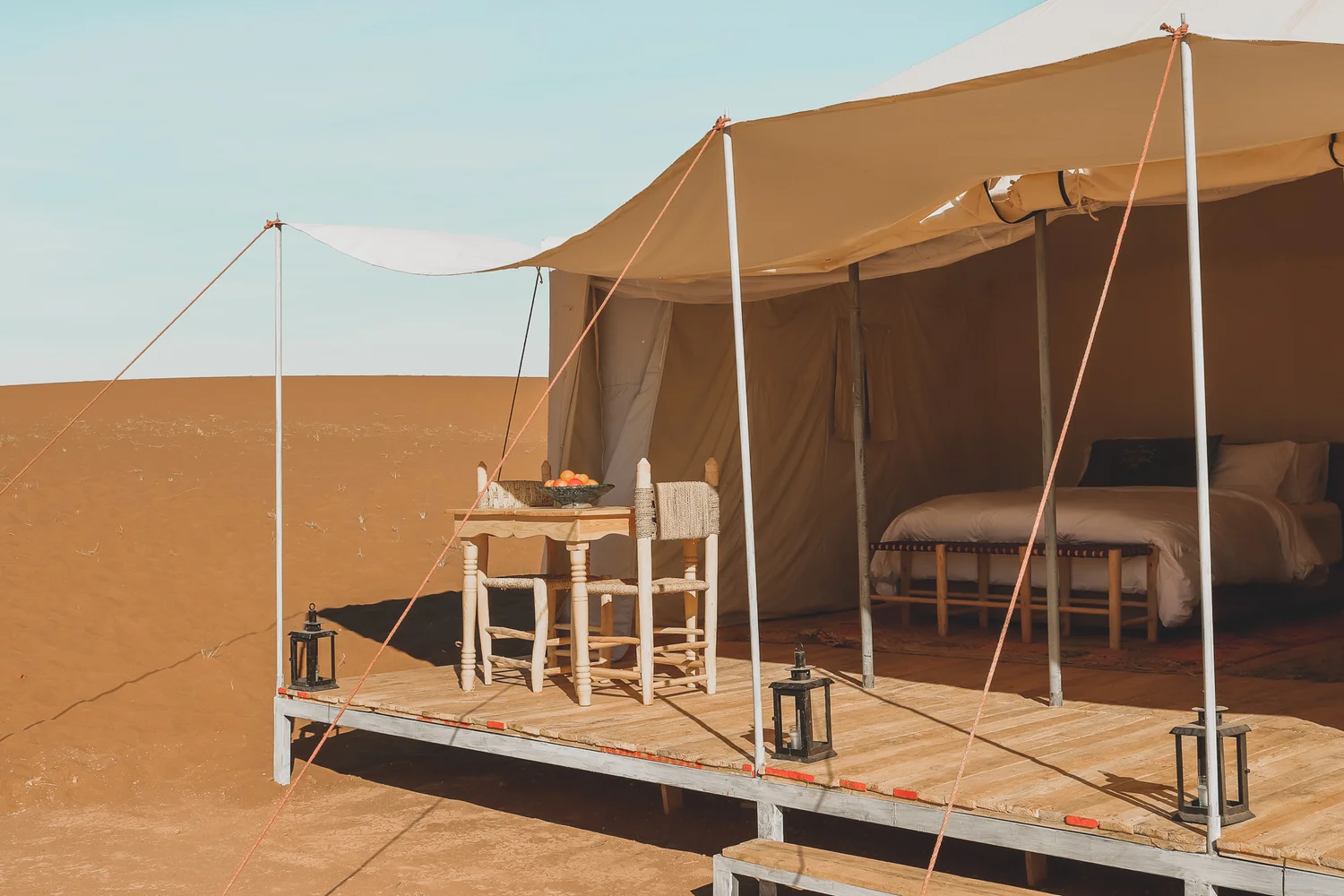
The list that prevents complaints: broken-in closed shoes, a genuinely warm layer and a hat for the evening, sunglasses and high-factor sun cream, a head torch, and a scarf. Everything else we provide, including bedding, towels and the heating in the tents.
Send it to the group yourself, three weeks out and again three days out. People read the second one.
Decision four: luggage
Four 4x4s carrying sixteen people can take sixteen normal suitcases and not much more. Groups bringing equipment, and that means yoga props, sound bowls, filming kit, workshop materials, need to tell us the volume in advance so we add a vehicle. A sound healer arriving with fourteen bowls and no warning is a real thing that has happened.
If you are running a raid or a trek as part of the trip, luggage travels separately in the support vehicle and is in the tents before the group arrives.
What we handle and what you handle
We handle: all transfers from Marrakech, Ouarzazate or Zagora, the vehicles and drivers, everything at the camp, all meals, all activities, the dietary requirements, and the schedule as you have specified it.
You handle: the flights, your own group’s insurance, the packing list going out, and the arrival window being held.
We handle jointly: the arrival day timing. Send us the flight numbers rather than the times. Flights move, and we would rather see it ourselves than find out from a driver waiting at the airport.
Numbers worth having before you write to us
Group size. Dates. Rough arrival and departure times if known, flight numbers if booked. Whether you want road, helicopter or a mix. Any dietary requirements you already know. Any equipment volume. Any mobility considerations.
With those, a proposal takes us a day. Without them it takes four emails.
Send us what you have, even if it is incomplete.
Related: how to get from Marrakech to Erg Chegaga, helicopter versus 4x4 for an executive retreat and what to pack.
For a group of friends, a celebration or a reunion, the group trip page explains how the whole camp works for up to twenty guests, with one global rate for the camp.