Anyone who has organised a sober retreat at a hotel knows the specific failure. The venue agrees the group is dry. Then there is a minibar in each room, a bar in the lobby, a wine list at dinner, and a member of staff who cheerfully offers a glass to somebody on their fourth day. None of this is malice. It is simply what a hotel is.
A camp with no bar is a different proposition, and the difference is worth being precise about.
What we can actually guarantee
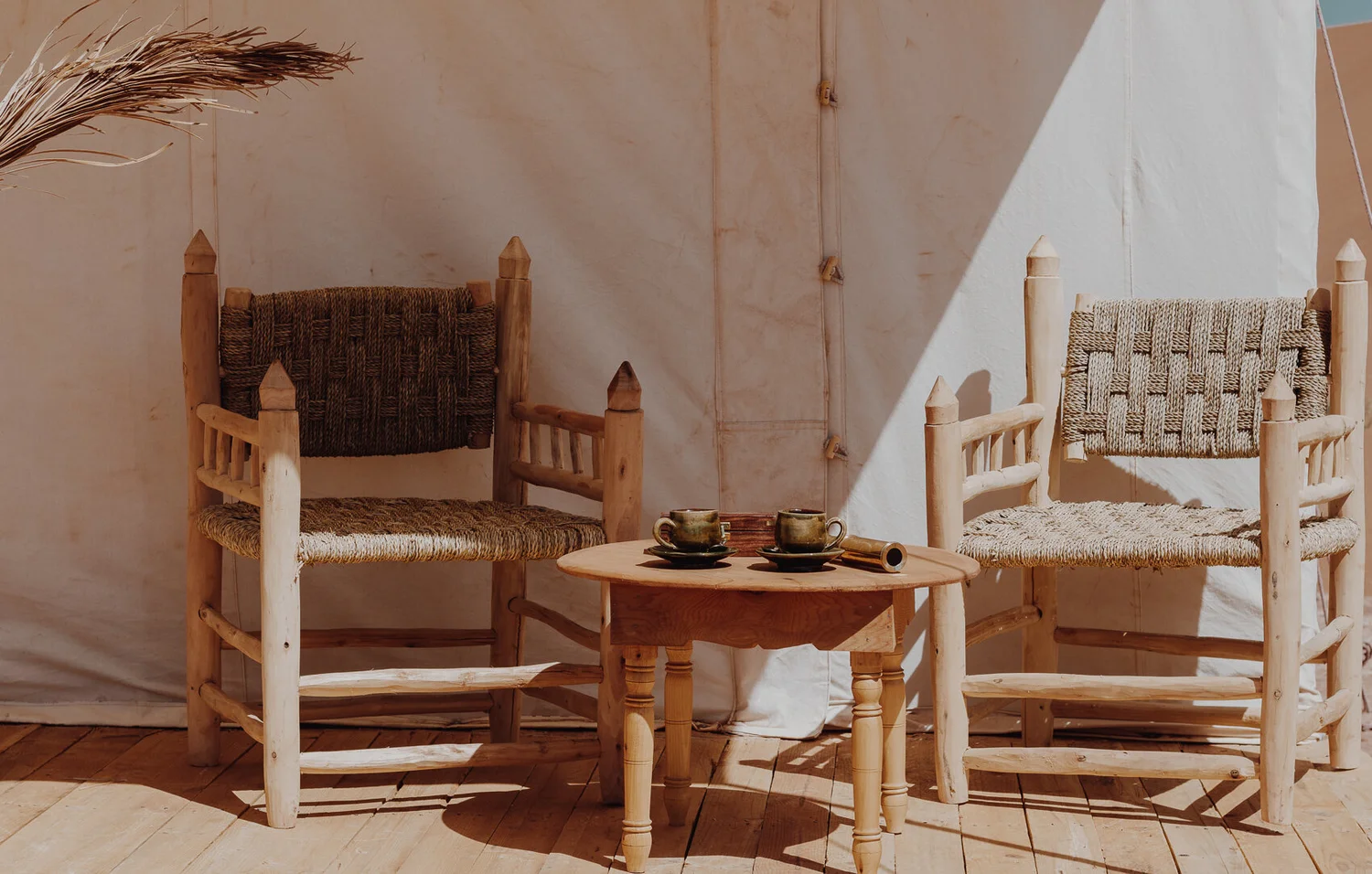
We are a small camp of eight tents. There is no bar, no lobby and no minibar, and when a group takes the whole camp, there are no other guests either. Alcohol arrives here only because someone brought it or because a group asked for it in advance.
When a group tells us the retreat is dry, we do not stock it. That means there is none on site, none in a storeroom, and no member of staff carrying a wine list. There is nothing to decline, because there is nothing there.
That is the guarantee, and it is a stronger one than any hotel can offer, not because we are more careful but because the situation is simpler.
The nearest alternative is sixty kilometres away
This is the part that facilitators in recovery work tend to ask about second, and it is the part that no city venue can match.
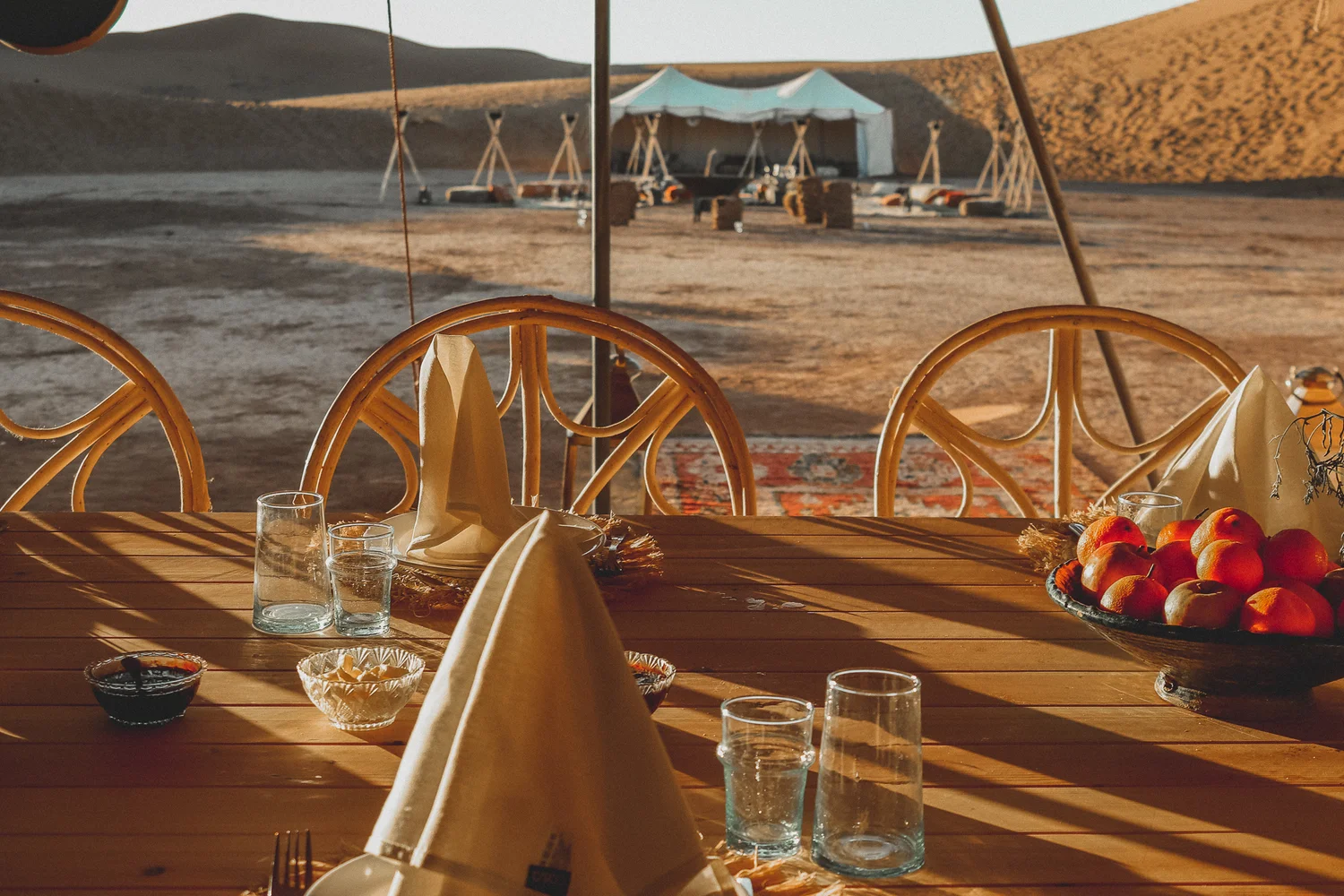
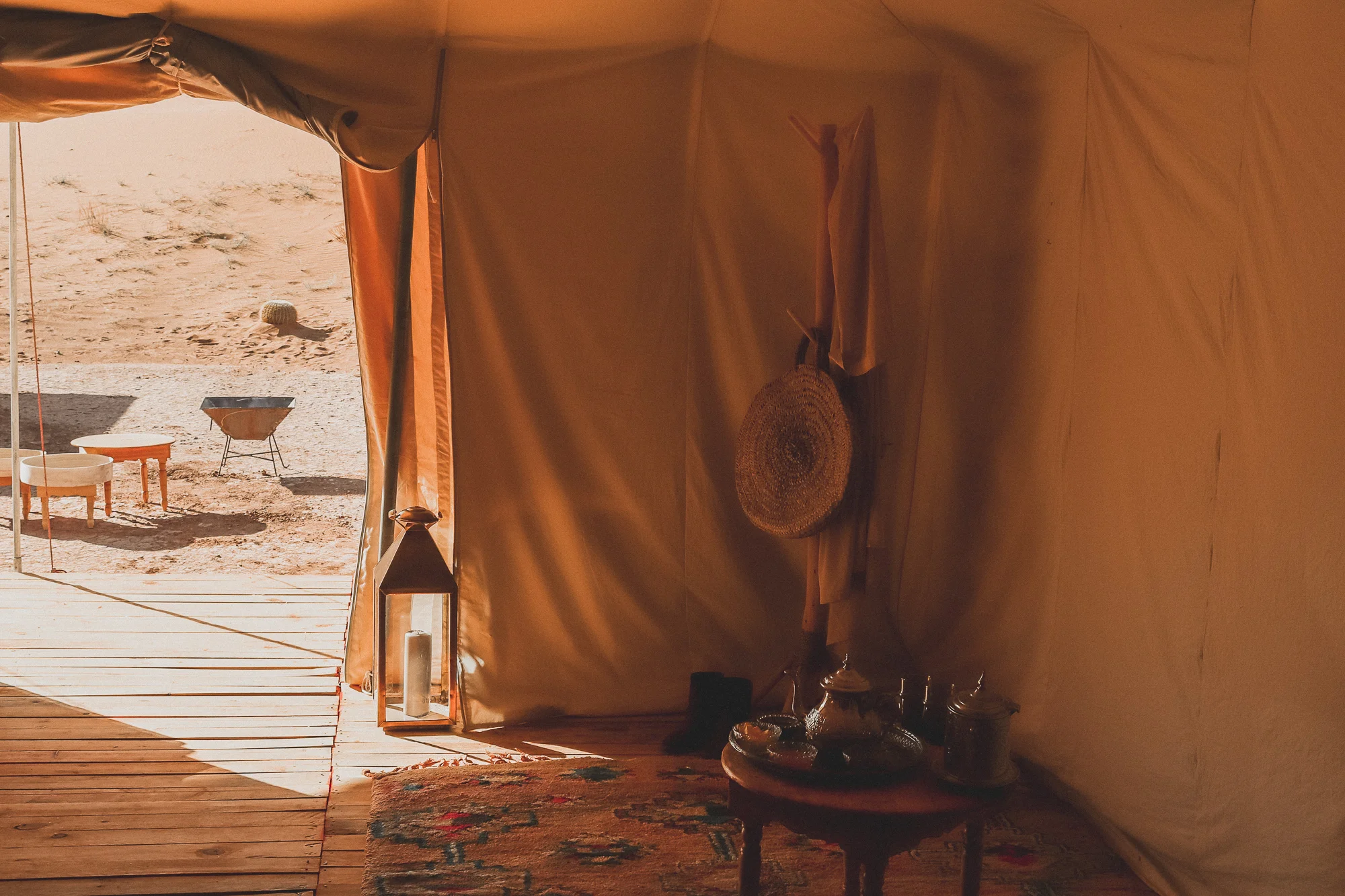
The camp sits in the dunes of Erg Chegaga. The nearest paved road is around sixty kilometres away across piste. The nearest shop of any kind is in M’Hamid El Ghizlane, at the end of that road. There is no taxi, no delivery and no walking to a village. The only vehicles are ours.
For many groups this is simply a logistical fact. For a group where someone is early in recovery, it is the entire reason for choosing a remote venue, and it should be said plainly rather than hinted at in marketing language.
What replaces it at the table
Something has to occupy the shape that a drink occupies, or dinner feels like an absence.
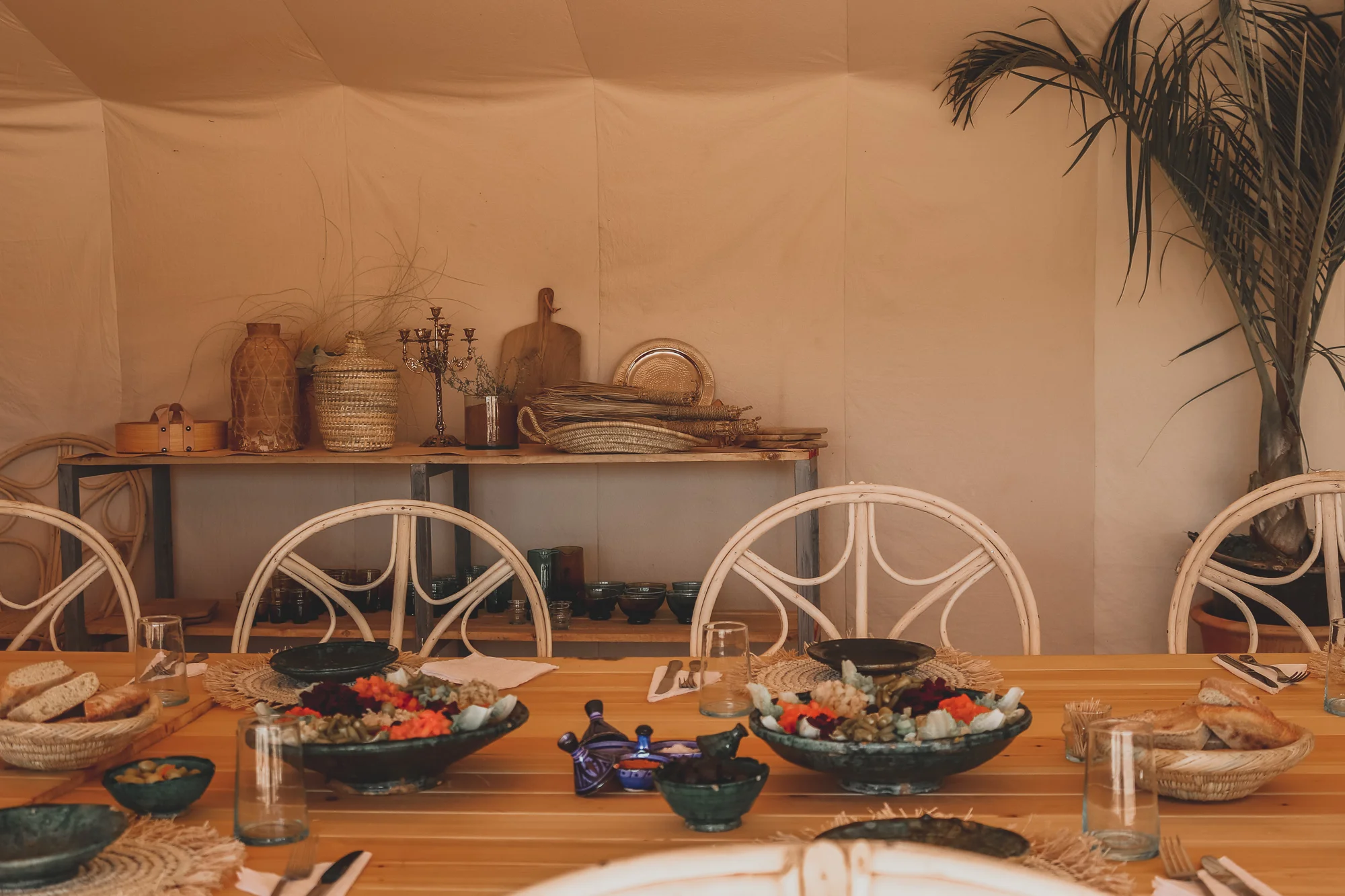
What we serve: mint tea poured properly, which is a ceremony and takes time. Fresh juices. Infusions made from what grows around here. Sparkling water served at the table in the same way wine would be, in the same glassware, because the ritual matters more than the contents.
That last detail sounds small and is not. Groups consistently tell us that being served attentively, in good glassware, at a long candlelit table, removes the sense of being on a lesser version of the evening.
Where sober groups tend to struggle, and what we do
The fourth night. A retreat can have one difficult evening, and in a dry group it may well land on the third or fourth. What helps is having somewhere to go that is not the dining table: the fire, the dunes above camp, a private corner of the majlis. Ask any venue whether there are three or four distinct places a person can be at ten in the evening. If the answer is one communal space, that is a problem.
Staff who do not know. We brief the team before your group arrives. Nobody offers anything, nobody asks why, and nobody makes a well-meaning comment about the occasion. This is a briefing question, and you should ask it of every venue.
Other guests. When your group takes the whole camp, there are none. The camp is closed to anyone else for the duration of your stay.
Not only recovery
The groups who ask us for dry retreats are more varied than people assume. Recovery communities, yes. Also Muslim groups, for whom this is simply normal and who are frequently made uncomfortable by venues that treat abstinence as a special arrangement. Also corporate groups who have decided that a leadership offsite works better without it. Also women’s health and perimenopause groups, where sleep is the point of the week and alcohol is the obvious thing to remove.
We do not need to know which you are. We need to know the answer is yes.
Practical
Eight tents, two to eighteen guests and up to twenty with extra beds, full board with a private chef. October to April. Four nights minimum for most retreat formats.
The camp is quoted as a whole rather than per person. Removing alcohol does not change the rate, and we mention that because people ask and are sometimes embarrassed to.
To arrange it
Say the retreat is dry when you first write to us, along with your dates and group size. It goes into the brief before anything is ordered, which is the only way this actually works.
Related: the retreat leader’s guide and how we host Middle Eastern retreats.